Featured Selections
Discover by Category
Recently added
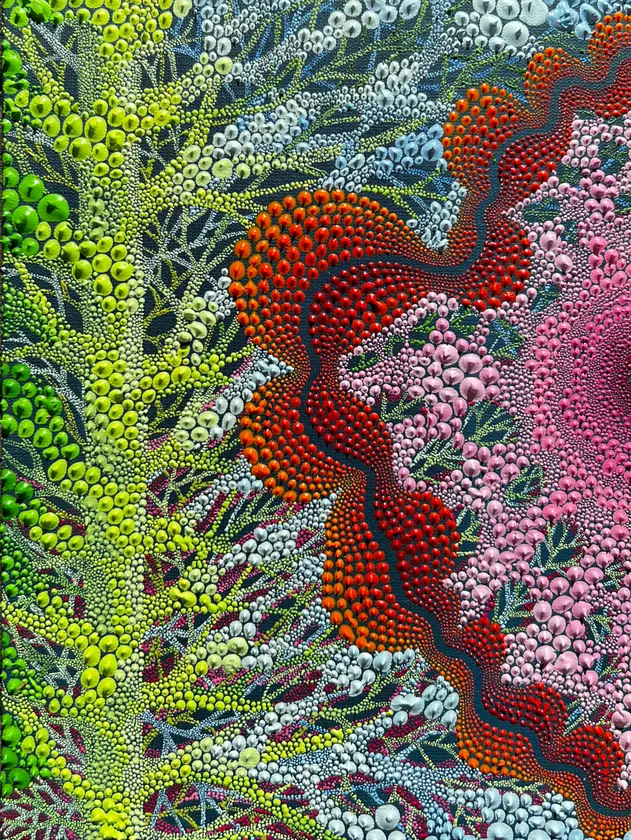
" Garden Flowers "  - Subjektiv.art
" Garden Flowers "
by Yehor Dulin
€43035 × 40 cm
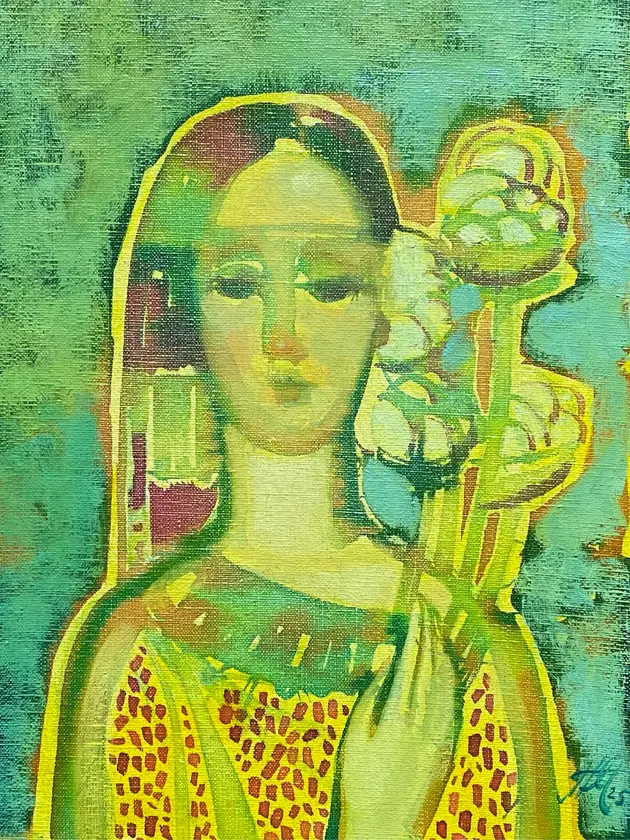
Tulips  - Subjektiv.art
Tulips
by Anna Shkinder
$14030 × 40 cm
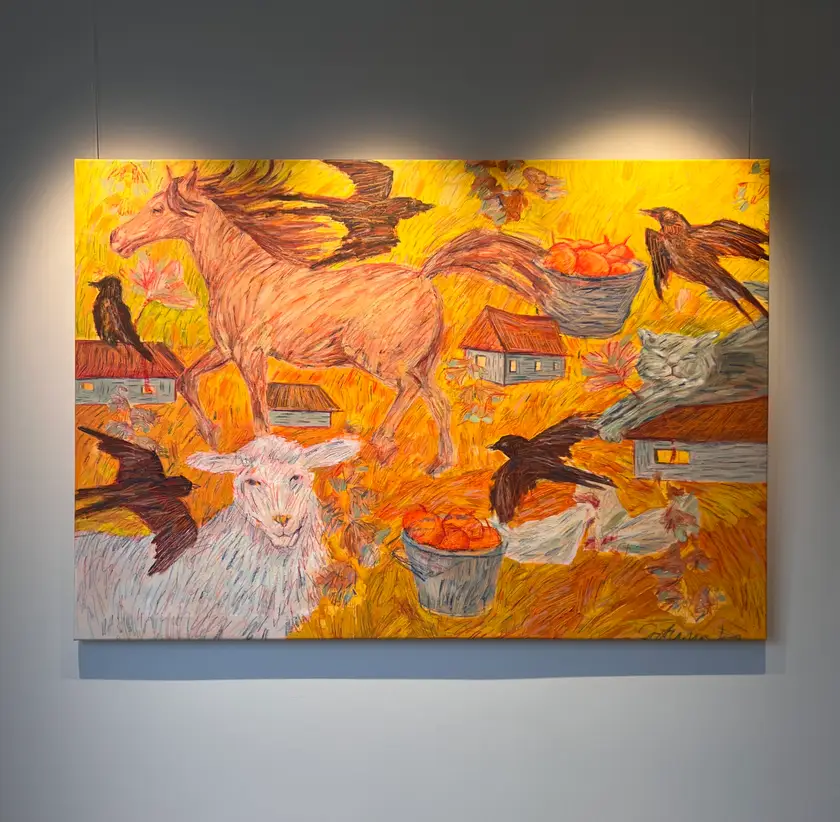
Tomorrow  - Subjektiv.art
Tomorrow
by Anna Shkinder
$9020 × 30 cm
Reflections  - Subjektiv.art
Reflections
by Anna Shkinder
$25060 × 60 cm
"Water lilies"  - Subjektiv.art
"Water lilies"
by Yehor Dulin
€2 200100 × 80 cm
" Сherry"  - Subjektiv.art
" Сherry"
by Yehor Dulin
€28035 × 30 cm
Duo  - Subjektiv.art
Duo
by Oleksandr Topchyi
$26030 × 40 cm
Coffee  - Subjektiv.art
Coffee
by Oleksandr Topchyi
$70050 × 70 cm
Nude  - Subjektiv.art
Nude
by Oleksandr Topchyi
$43040 × 50 cm
Ocean  - Subjektiv.art
Ocean
by Oleksandr Topchyi
$60070 × 90 cm
Featured Artists
Artwork by Liudmila Davydenko
Liudmila Davydenko
Liudmila Davydenko
Ukraine
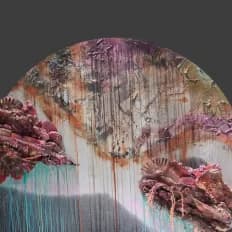
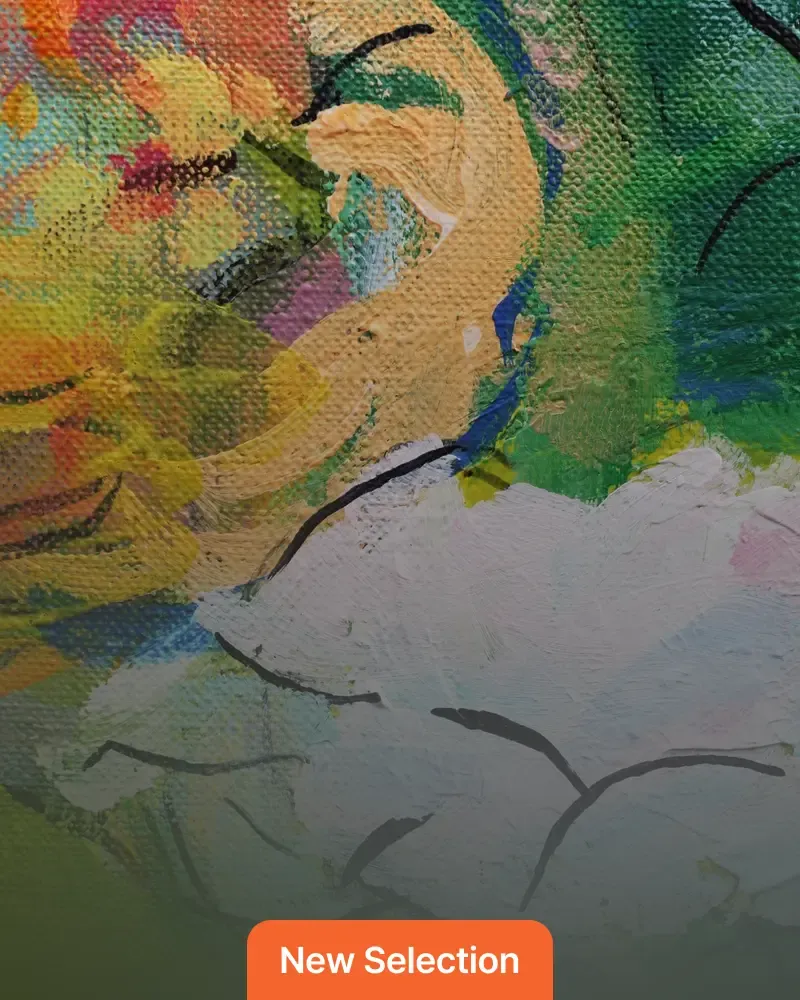
Some artists speak through colours, others through form, but with Liudmila Davydenko, it’ something more - something beneath the surface, beneath even the layers of paint she so meticulously applies to her canvases. I first came across her work at an exhibition in Vienna, where her paintings, rich in texture and introspection, seemed to hold something unseen, something just out of reach. I knew then that I needed to understand her process, to see her world through her own eyes. Our visit to her studio in Lviv was planned after a long working session with my co-founders. It was a chance to engage directly with an artist whose work had left an impression on me. When we arrived, the setting was unexpectedly cinematic, her studio was nestled inside an old Soviet industrial building, its long, dimly lit corridors stretching endlessly like something out of Kubrick’ The Shining. There was a strange stillness in the air, a kind of suspended time, which somehow made the vibrancy of her paintings even more striking. Stepping into her workspace, I was immediately met with the scent of oil paint and the quiet discipline of an artist deeply immersed in her craft. Liudmila belongs to a generation of artists for whom patience and precision are second nature. Her early training as a sculptor is evident in the way she approaches her paintings - not as flat compositions, but as something three-dimensional, something that carries weight and substance. She doesn’ simply paint; she constructs. Every piece undergoes an intricate layering process, sometimes up to eight layers deep, giving the final work a sense of depth that feels almost geological, as if revealing different strata of meaning.
Artwork by Myroslava Perevalska
Myroslava Perevalska
Ukraine
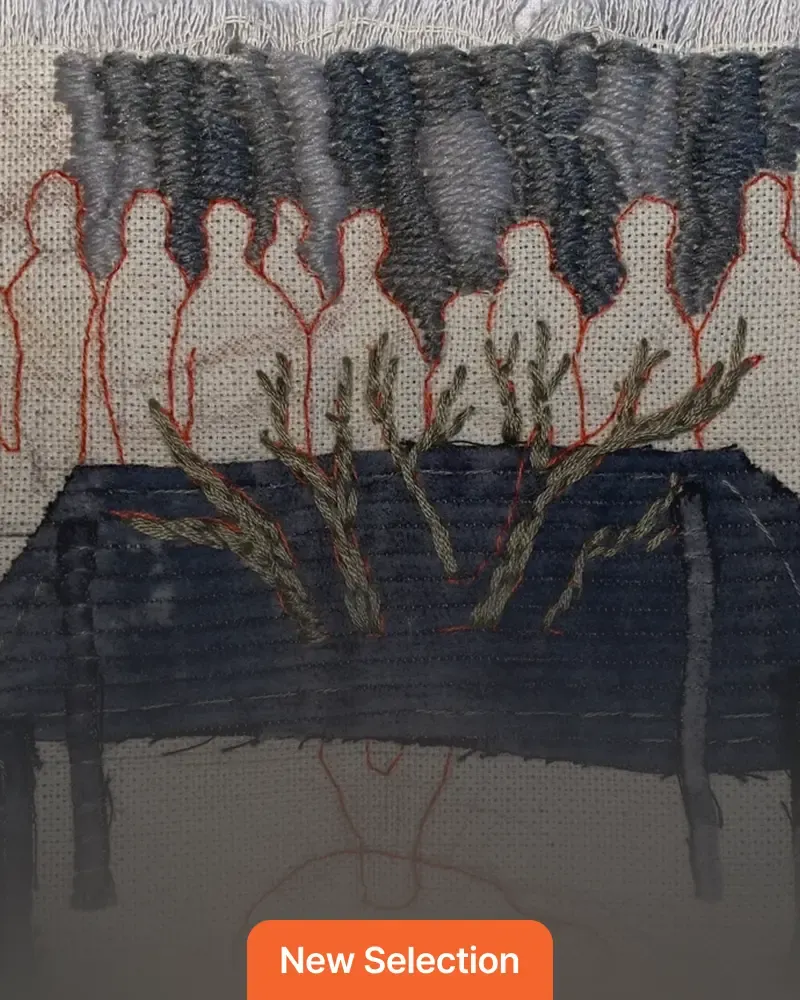
Some artists paint what they see. Others paint what they dream. Myroslava Perevalska paints what she feels, and, more importantly, what she fears losing. In a world rushing forward, she is an artist who asks us to slow down, to breathe, to see before the colours fade, before the emotions slip away, before time moves beyond our grasp. When we spoke, she described her connection to art in a way I had never heard before. “ think of myself as a fish,” she told me. “ fish that doesn’ question the water, that doesn’ think about how deep it swims. It just exists.” Art is her element, her lifeblood, and her way of understanding the world. It’ why, even as war reshapes the reality around her, she continues to create, not just as a form of resistance but as a way to document the truth as she experiences it. Her paintings are immediately recognisable, figures emerging from bold, urgent strokes of red, white, and black. Red, she told me, is the colour of life, of passion, of survival. It pulses through her work, a constant heartbeat. But it is also the colour she fears losing. “ greatest happiness,” she said, referencing Borges, “ when a blind man dreams of red.” The idea of losing that sensation, of not being able to feel the depth of colour, is her deepest fear. But instead of running from it, she embraces it, pours it into her canvases, ensuring that even if time erodes memory, the intensity of her vision remains. As we talked, her thoughts spiralled outward - philosophy, history, technology, even the fate of humanity. “ are all on the Titanic,” she told me. “ comfortable but unaware of what’ coming.” The world is changing too quickly. Wars, pandemics, artificial intelligence, isolation. She fears we are forgetting how to truly be present. That people are becoming less human. She sees this loss reflected in modern art, how simple narratives and raw emotion are disappearing, replaced by a detachment from the soul of creation.
Artwork by Carolina Sardinha
Carolina Sardinha
Carolina Sardinha
Portugal
Carolina Sardinha born in 1982, lives and works in Lisbon. Academic training: . Drawing Development Year at The Royal Drawing School, London (2024-ongoing); . Opened her own Studio, devoting herself entirely to her practise since then (2020); . Tutorial Scheme at Sociedade Nacional de Belas Artes, Lisbon (2018 - 2020); . Aquatint Training at Galeria Diferença, Lisbon (2014 - 2015); . Engraving Techiniques Training at Taller José Rincón Gallery, Madrid (2013 - 2014); . Drawing Education at CIEAM, Faculdade de Belas Artes, Lisbon (2009 - 2010); . Wood block Printmaking Training at the National Print Museum, Dublin (2008 - 2009); . Socrates Erasmus Program, Università Degli Studi di Roma “La Sapienza”, Rome (2003 - 2004); . Degree in Architecture from Instituto Superior Técnico, Lisbon (2006). Selected Individual Exhibitions: . Matter | Mist, Azenhas do Mar (2023); . Reallocated, CCSL Advogados, Lisbon (2020); . Ageing Series, OH | OS, Lisbon (2019); . Essay on Ma, Ler Devagar Bookshop, Lisbon (2019); . La piel de las Cosas, Taller José Rincón Gallery, Madrid (2015). Selected Group Exhibitions: . Group Show at Livraria Sá da Costa, Lisbon (2022); . Finalists Exhibition, Sociedade Nacional de Belas Artes, Lisbon (2019); . Printmaking Exhibition, Galeria Diferença, Lisbon (2016); . Selected Artists Exhibition, Casa de La Moneda, Madrid (2015); . Printmaking Artists Exhibition, Casa de Cultura del Ayuntamiento de Carmona, Carmona (2014). Prizes: . Selected Artist for Collection “The Mediterranean”, The Curators (2020); . Jóvenes Creadores de Calcografía Nacional Prize from the Real Academia de Belas Artes de de San Fernando de Madrid (2014). Collections: Her work is represented in private collections in Portugal and abroad.
Artwork by Dasha Tsapenko
Dasha Tsapenko
Dasha Tsapenko
Netherlands
Some artists paint. Some sculpt. But Dasha Tsapenko grows her art. I remember the first time I encountered her work, it wasn’ just visually striking, it was revolutionary. It blurred the line between creation and cultivation. Dasha doesn’ see herself as the sole author of her works; instead, she collaborates with nature itself. Her textiles, garments, and installations are not merely crafted, they are nurtured. She prepares the foundation, then steps back to allow fungi, fibres, and microorganisms to shape the outcome. What emerges is something completely unique - art that breathes, evolves, and ultimately becomes part of the world in a way that traditional works never could. Her studio is unlike any I’ seen before. It’ not just a workshop, it’ part textile lab, part microbiology station, part experimental farm. A place where science and creativity intertwine seamlessly. She works with living organisms, primarily mycelium, the vast underground network of fungi that connects trees and plants beneath forests. But here, in her hands, mycelium doesn’ just connect nature, it creates. It grows into textiles, forming intricate patterns and textures, embedding itself into the very fabric of her art. It’ a process that is at once scientific and poetic. The unpredictability of working with living materials means that no two pieces are ever the same. She carefully prepares the ground, sometimes weaving or sewing textiles in a particular way to encourage the fungi’ growth in a desired form. But the final result? That’ left to nature.
Subjektiv.art
Backed by
Newsletter
Sign up for our newsletter to explore artist stories, stay updated on events, and discover exciting new artworks in our community.
Backed by