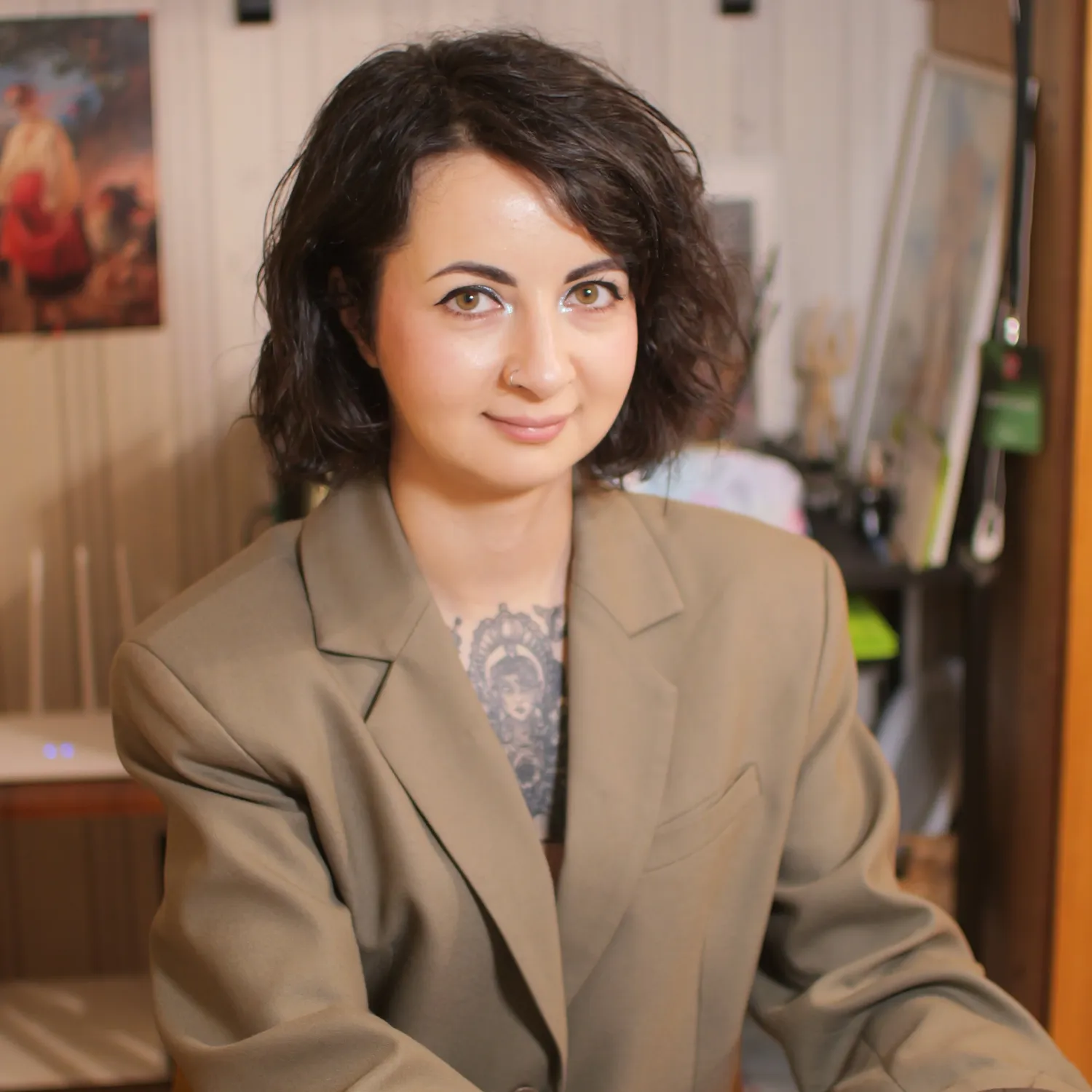
Tamara Safarova (b. 1992) is a Ukrainian feminist queer artist of Azerbaijani origin who lives and works in Kyiv, Ukraine.
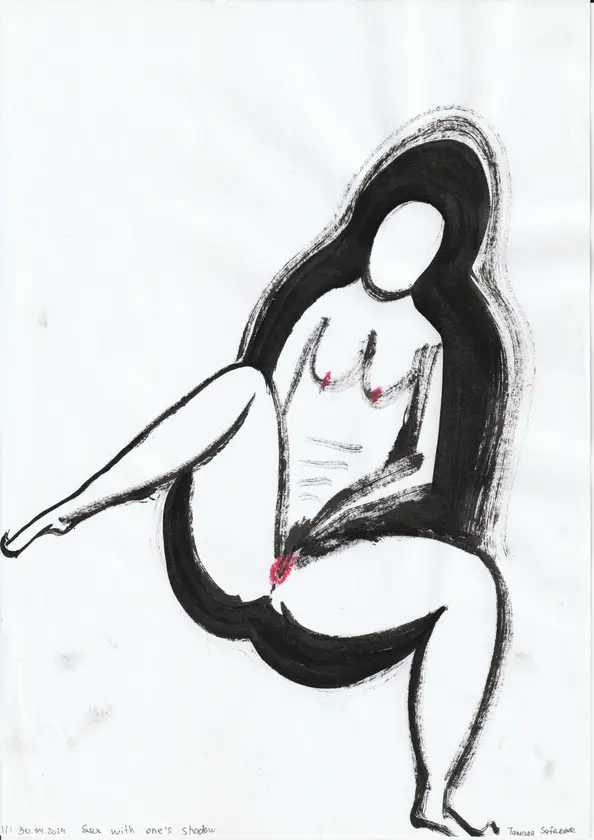
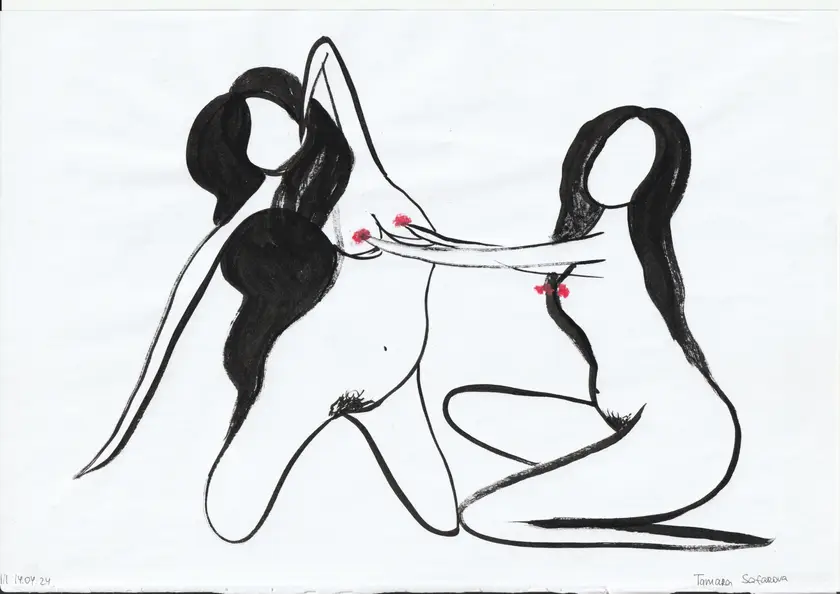
Working across painting, graphics, comics, photography, digital media, and performance, Safarova explores themes of identity, memory, cultural heritage, gender, trauma and transformation.
Her work seeks to expose the invisible: making internalised experiences and collective silences visible, felt, and shared. Mythology, personal history, and symbolic archetypes form the core of her artistic vocabulary.
Safarova’s visual language often bridges the deeply personal with the mythic and the political, grounded in both the natural world and the layered cultural context of postcolonial experiences.
Her first solo exhibition took place in 2022 at the Kunstmuseum in Stuttgart, Germany. Since then, her work has been shown internationally, including at Santa Maria delle Grazie (Venice, Italy), Kühlhaus (Berlin, Germany), the National Museum of Ukrainian Folk Decorative Art (Kyiv, Ukraine), Mystetskyi Arsenal (Kyiv, Ukraine), and Poltava Art Museum (Poltava, Ukraine).
Her works are held in public collections in Italy, Belgium, and Ukraine.
What do you see in this artwork?
Contribute your perspective to the community & earn rewards. Leave your reflection below.
Tamara Safarova
Artist from Ukraine
Tamara Safarova (b. 1992) is a Ukrainian feminist queer artist of Azerbaijani origin who lives and works in Kyiv, Ukraine.
Working across painting, graphics, comics, photography, digital media, and performance, Safarova explores themes of identity, memory, cultural heritage, gender, trauma and transformation.
Her work seeks to expose the invisible: making internalised experiences and collective silences visible, felt, and shared. Mythology, personal history, and symbolic archetypes form the core of her artistic vocabulary.
Safarova’s visual language often bridges the deeply personal with the mythic and the political, grounded in both the natural world and the layered cultural context of postcolonial experiences.
Her first solo exhibition took place in 2022 at the Kunstmuseum in Stuttgart, Germany. Since then, her work has been shown internationally, including at Santa Maria delle Grazie (Venice, Italy), Kühlhaus (Berlin, Germany), the National Museum of Ukrainian Folk Decorative Art (Kyiv, Ukraine), Mystetskyi Arsenal (Kyiv, Ukraine), and Poltava Art Museum (Poltava, Ukraine).
Her works are held in public collections in Italy, Belgium, and Ukraine.
What do you see in this artwork?
Contribute your perspective to the community & earn rewards. Leave your reflection below.
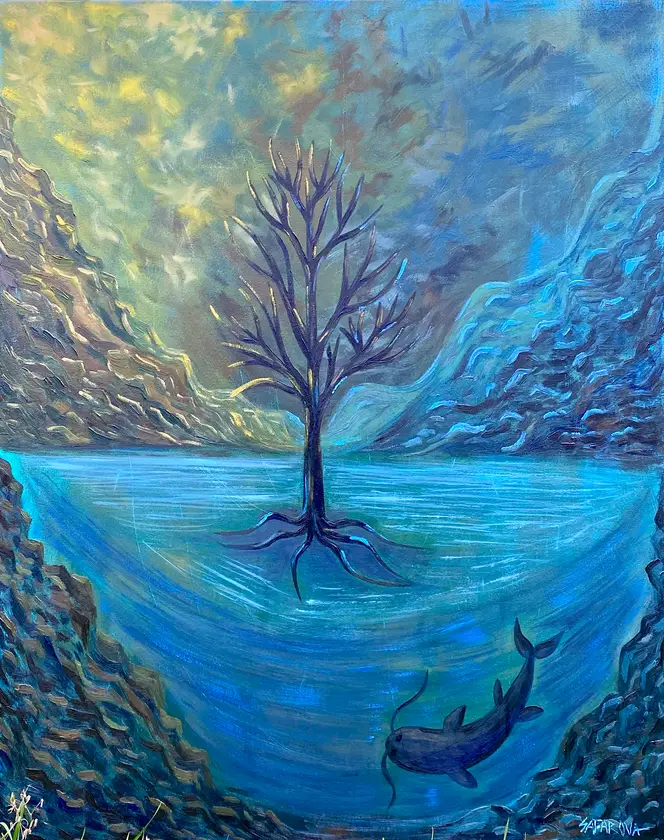
The work was created at the Bakota hub 2025 residence.
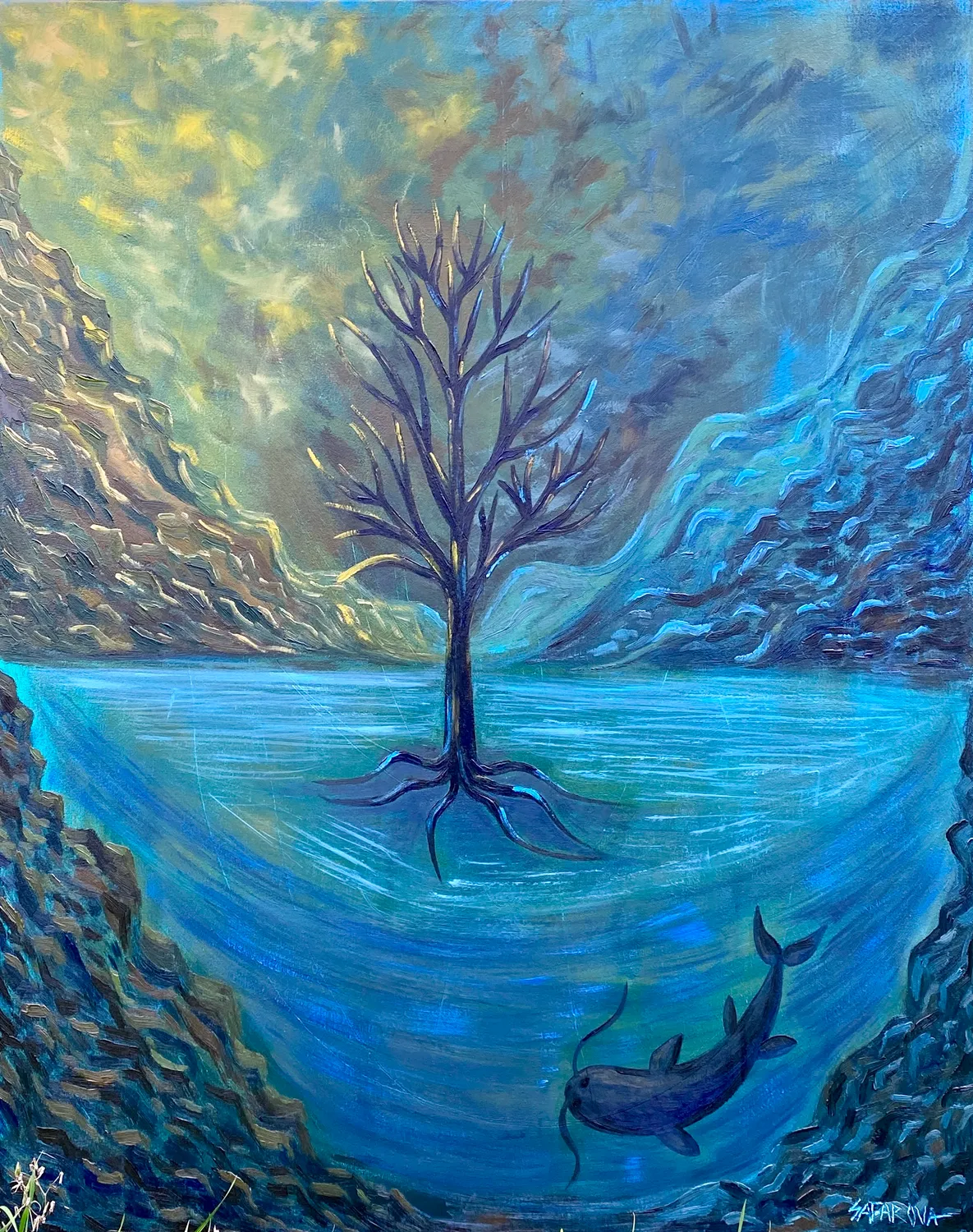
The image of the painting arose from testimonies about flooded villages, where residents were forced to destroy their homes and cut down trees with their own hands before the construction of a hydroelectric power plant. This act became a symbolic eradication not only of physical space, but also of the very life of the community.
The canvas depicts a tree that does not exist in the visible world. It grows at the bottom of a flooded village, flowerless and barren, because there are no people, bees, or breath around it. The tree seems dead, and at the same time it lives on as a living memory of itself and the area.
The catfish, guardian of the depths, watches over it underwater, protecting the stories of those who lived here and those who are yet to come. The tree exists on the border between ‘here’ and ‘there,’ in memories and premonitions, in the past and the future.
Its roots stretch through time, reminding us that memory does not sink as long as there are those who remember.
Tamara Safarova (b. 1992) is a Ukrainian feminist queer artist of Azerbaijani origin who lives and works in Kyiv, Ukraine.
Working across painting, graphics, comics, photography, digital media, and performance, Safarova explores themes of identity, memory, cultural heritage, gender, trauma and transformation.
Her work seeks to expose the invisible: making internalised experiences and collective silences visible, felt, and shared. Mythology, personal history, and symbolic archetypes form the core of her artistic vocabulary.
Safarova’s visual language often bridges the deeply personal with the mythic and the political, grounded in both the natural world and the layered cultural context of postcolonial experiences.
Her first solo exhibition took place in 2022 at the Kunstmuseum in Stuttgart, Germany. Since then, her work has been shown internationally, including at Santa Maria delle Grazie (Venice, Italy), Kühlhaus (Berlin, Germany), the National Museum of Ukrainian Folk Decorative Art (Kyiv, Ukraine), Mystetskyi Arsenal (Kyiv, Ukraine), and Poltava Art Museum (Poltava, Ukraine).
Her works are held in public collections in Italy, Belgium, and Ukraine.