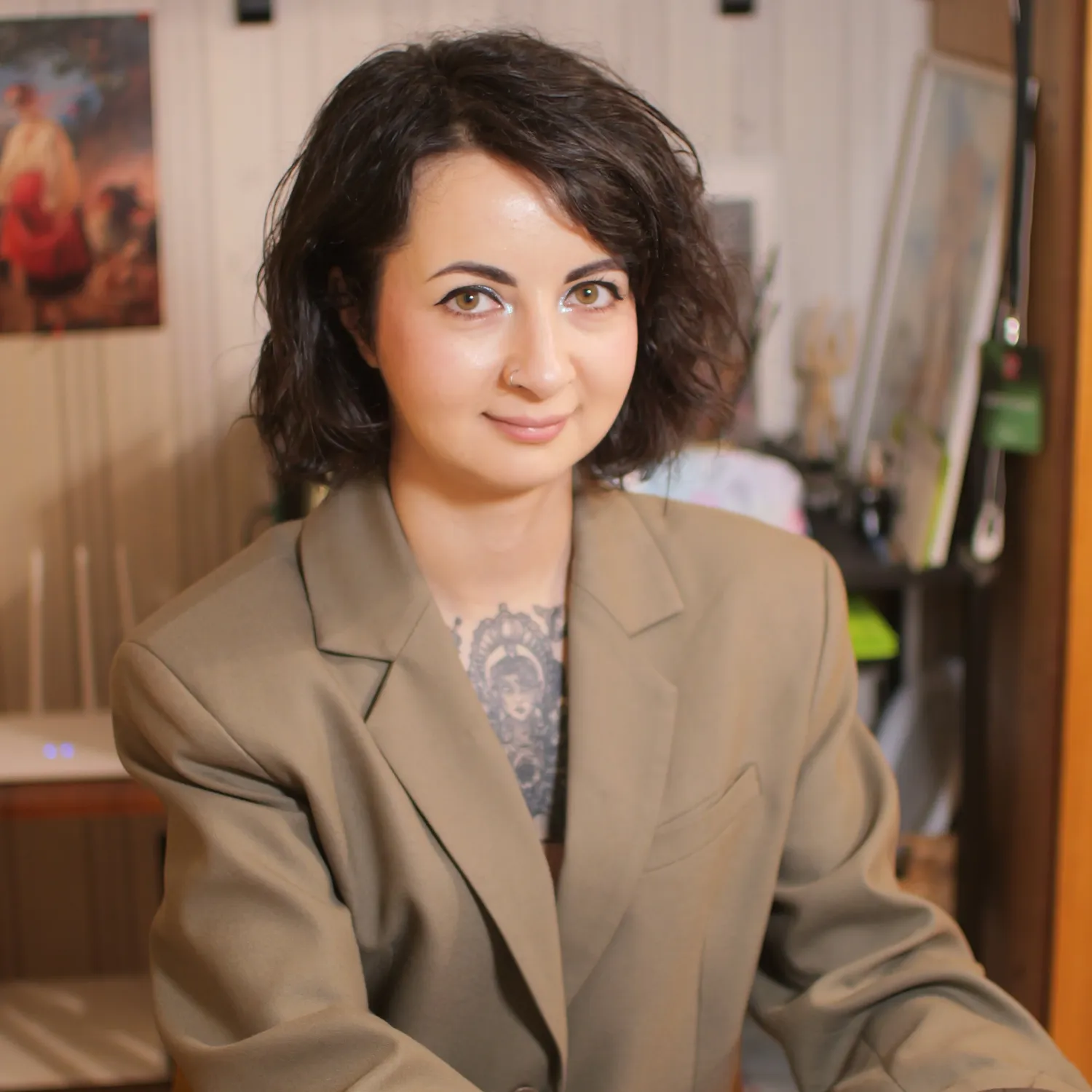
Tamara Safarova (b. 1992) is a Ukrainian feminist queer artist of Azerbaijani origin who lives and works in Kyiv, Ukraine.
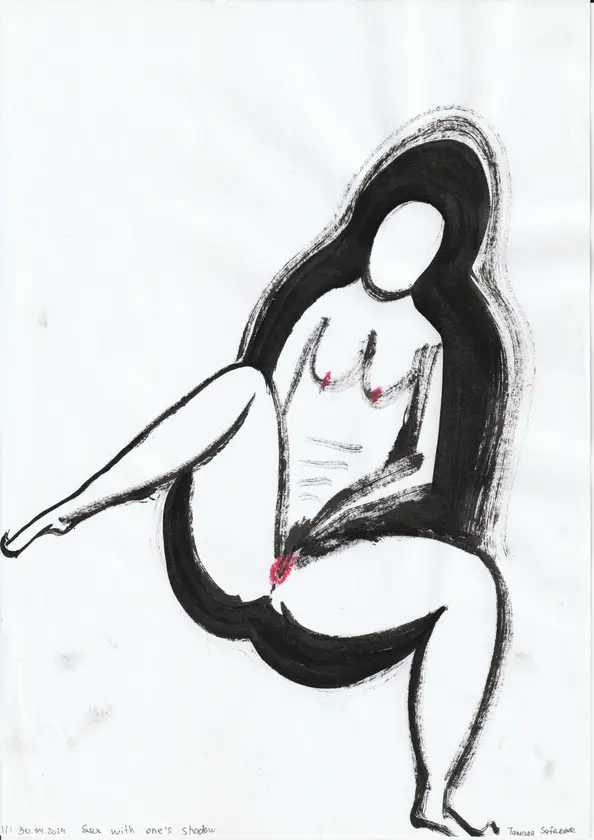
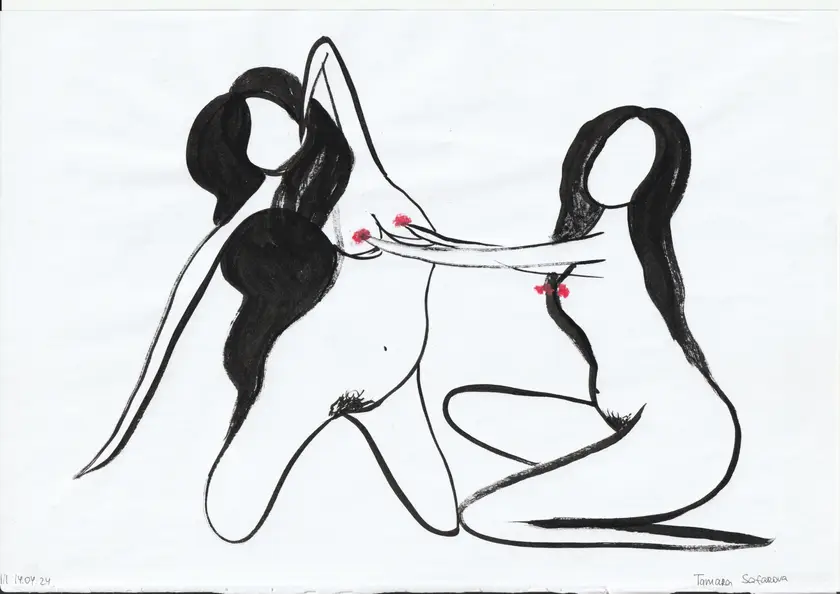
Working across painting, graphics, comics, photography, digital media, and performance, Safarova explores themes of identity, memory, cultural heritage, gender, trauma and transformation.
Her work seeks to expose the invisible: making internalised experiences and collective silences visible, felt, and shared. Mythology, personal history, and symbolic archetypes form the core of her artistic vocabulary.
Safarova’s visual language often bridges the deeply personal with the mythic and the political, grounded in both the natural world and the layered cultural context of postcolonial experiences.
Her first solo exhibition took place in 2022 at the Kunstmuseum in Stuttgart, Germany. Since then, her work has been shown internationally, including at Santa Maria delle Grazie (Venice, Italy), Kühlhaus (Berlin, Germany), the National Museum of Ukrainian Folk Decorative Art (Kyiv, Ukraine), Mystetskyi Arsenal (Kyiv, Ukraine), and Poltava Art Museum (Poltava, Ukraine).
Her works are held in public collections in Italy, Belgium, and Ukraine.
Look for 20 seconds. What do you see?
Contribute your perspective to the community & earn rewards. Leave your reflection below.
Tamara Safarova
Artist from Ukraine
Tamara Safarova (b. 1992) is a Ukrainian feminist queer artist of Azerbaijani origin who lives and works in Kyiv, Ukraine.
Working across painting, graphics, comics, photography, digital media, and performance, Safarova explores themes of identity, memory, cultural heritage, gender, trauma and transformation.
Her work seeks to expose the invisible: making internalised experiences and collective silences visible, felt, and shared. Mythology, personal history, and symbolic archetypes form the core of her artistic vocabulary.
Safarova’s visual language often bridges the deeply personal with the mythic and the political, grounded in both the natural world and the layered cultural context of postcolonial experiences.
Her first solo exhibition took place in 2022 at the Kunstmuseum in Stuttgart, Germany. Since then, her work has been shown internationally, including at Santa Maria delle Grazie (Venice, Italy), Kühlhaus (Berlin, Germany), the National Museum of Ukrainian Folk Decorative Art (Kyiv, Ukraine), Mystetskyi Arsenal (Kyiv, Ukraine), and Poltava Art Museum (Poltava, Ukraine).
Her works are held in public collections in Italy, Belgium, and Ukraine.
Look for 20 seconds. What do you see?
Contribute your perspective to the community & earn rewards. Leave your reflection below.
Jarylo is the god of love and pairing, flourishing nature, and birth, a mythological and ritualistic figure. He is depicted riding a horse, embodying the energy of the summer sun and its boundless power. The skull in his right hand holds symbolic significance, reminding the viewer of the necessity to cherish the fleeting moments of life and live fervently. The artwork invites contemplation on themes of existence and life force.
Tamara Safarova (b. 1992) is a Ukrainian feminist queer artist of Azerbaijani origin who lives and works in Kyiv, Ukraine.
Working across painting, graphics, comics, photography, digital media, and performance, Safarova explores themes of identity, memory, cultural heritage, gender, trauma and transformation.
Her work seeks to expose the invisible: making internalised experiences and collective silences visible, felt, and shared. Mythology, personal history, and symbolic archetypes form the core of her artistic vocabulary.
Safarova’s visual language often bridges the deeply personal with the mythic and the political, grounded in both the natural world and the layered cultural context of postcolonial experiences.
Her first solo exhibition took place in 2022 at the Kunstmuseum in Stuttgart, Germany. Since then, her work has been shown internationally, including at Santa Maria delle Grazie (Venice, Italy), Kühlhaus (Berlin, Germany), the National Museum of Ukrainian Folk Decorative Art (Kyiv, Ukraine), Mystetskyi Arsenal (Kyiv, Ukraine), and Poltava Art Museum (Poltava, Ukraine).
Her works are held in public collections in Italy, Belgium, and Ukraine.