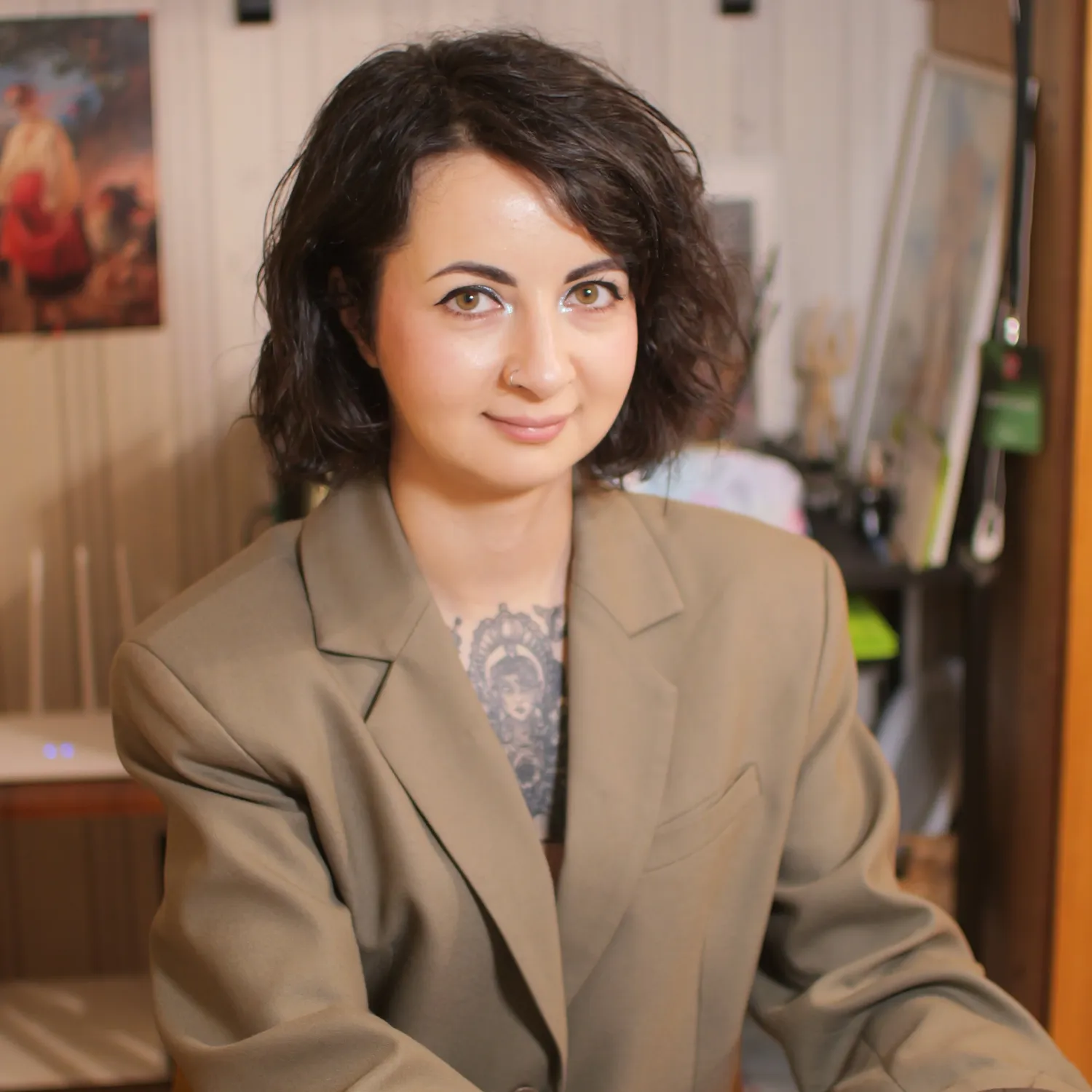
Tamara Safarova (b. 1992) is a Ukrainian feminist queer artist of Azerbaijani origin who lives and works in Kyiv, Ukraine.
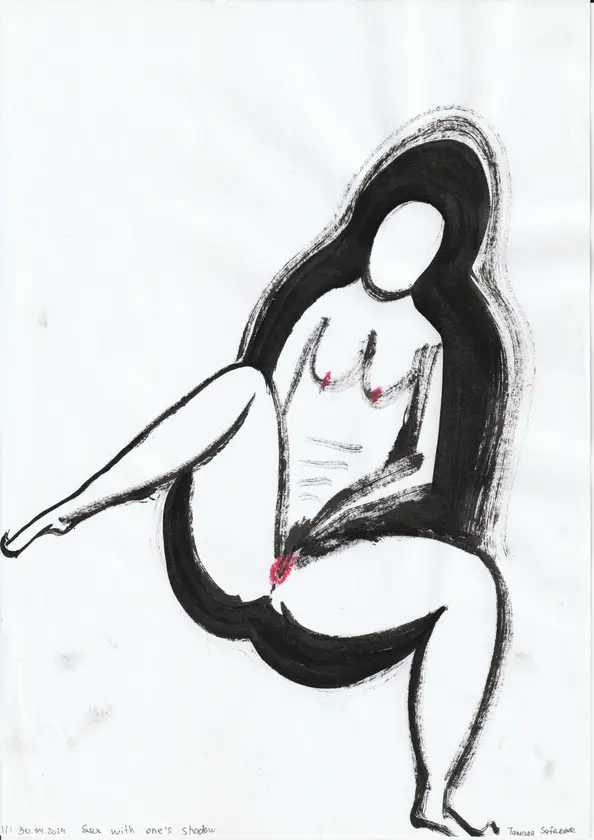
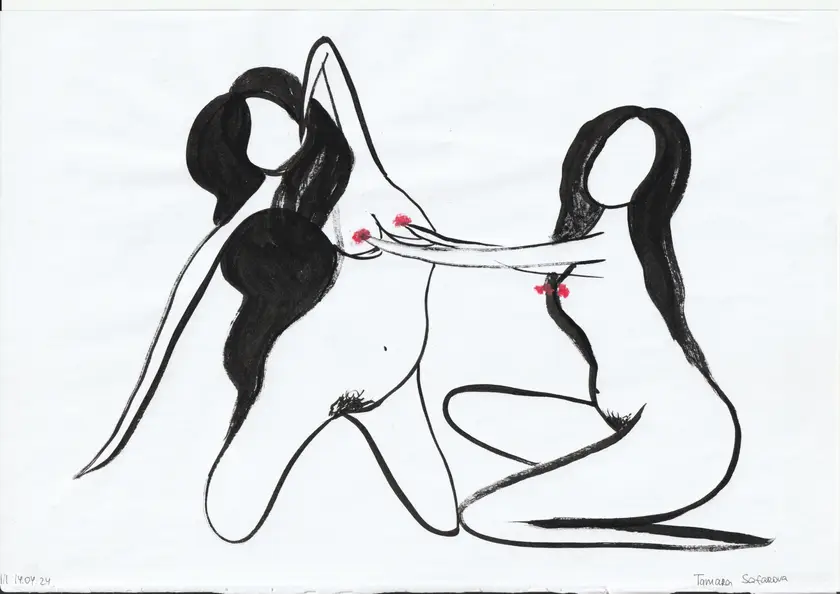
Working across painting, graphics, comics, photography, digital media, and performance, Safarova explores themes of identity, memory, cultural heritage, gender, trauma and transformation.
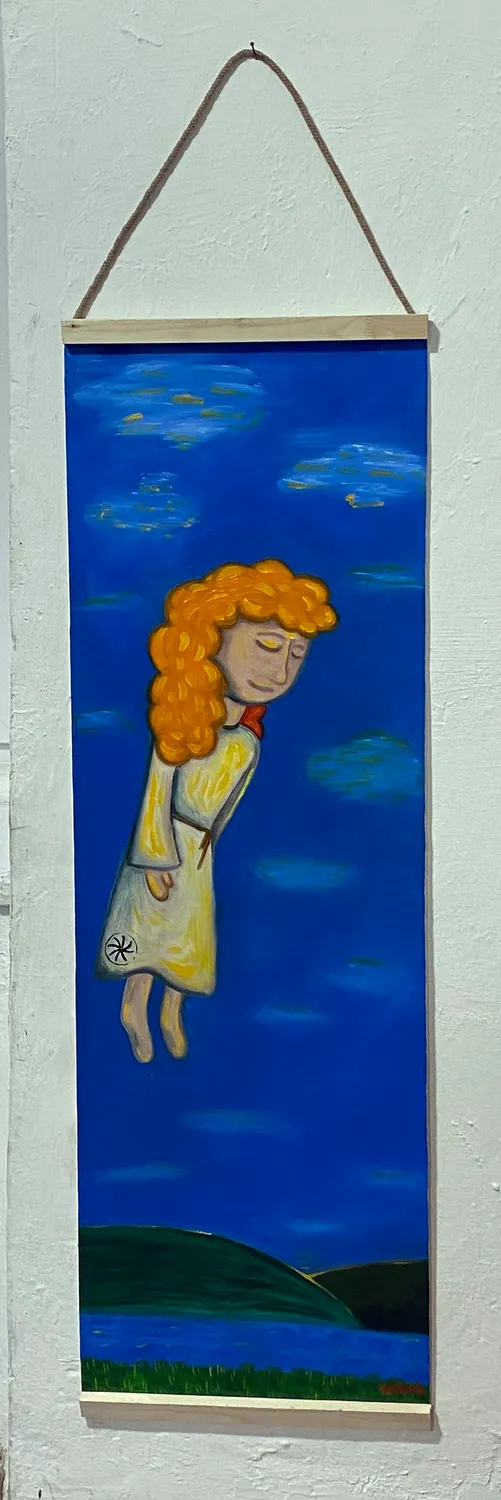
Her work seeks to expose the invisible: making internalised experiences and collective silences visible, felt, and shared. Mythology, personal history, and symbolic archetypes form the core of her artistic vocabulary.
Safarova’s visual language often bridges the deeply personal with the mythic and the political, grounded in both the natural world and the layered cultural context of postcolonial experiences.
Her first solo exhibition took place in 2022 at the Kunstmuseum in Stuttgart, Germany. Since then, her work has been shown internationally, including at Santa Maria delle Grazie (Venice, Italy), Kühlhaus (Berlin, Germany), the National Museum of Ukrainian Folk Decorative Art (Kyiv, Ukraine), Mystetskyi Arsenal (Kyiv, Ukraine), and Poltava Art Museum (Poltava, Ukraine).
Her works are held in public collections in Italy, Belgium, and Ukraine.
What do you see in this artwork?
Contribute your perspective to the community & earn rewards. Leave your reflection below.
Tamara Safarova
Artist from Ukraine
Tamara Safarova (b. 1992) is a Ukrainian feminist queer artist of Azerbaijani origin who lives and works in Kyiv, Ukraine.
Working across painting, graphics, comics, photography, digital media, and performance, Safarova explores themes of identity, memory, cultural heritage, gender, trauma and transformation.
Her work seeks to expose the invisible: making internalised experiences and collective silences visible, felt, and shared. Mythology, personal history, and symbolic archetypes form the core of her artistic vocabulary.
Safarova’s visual language often bridges the deeply personal with the mythic and the political, grounded in both the natural world and the layered cultural context of postcolonial experiences.
Her first solo exhibition took place in 2022 at the Kunstmuseum in Stuttgart, Germany. Since then, her work has been shown internationally, including at Santa Maria delle Grazie (Venice, Italy), Kühlhaus (Berlin, Germany), the National Museum of Ukrainian Folk Decorative Art (Kyiv, Ukraine), Mystetskyi Arsenal (Kyiv, Ukraine), and Poltava Art Museum (Poltava, Ukraine).
Her works are held in public collections in Italy, Belgium, and Ukraine.
What do you see in this artwork?
Contribute your perspective to the community & earn rewards. Leave your reflection below.
This painting embodies the concept of the Sun God, a significant figure in Ukrainian mythology with numerous incarnations.
When the shortest days and longest nights arrived, our ancestors perceived it as darkness prevailing over light. However, this moment actually marked the eve of a great victory. After December 12, the winter solstice, light began to triumph over shadow.
Infused with the strength and hope of our ancestors' beliefs, I created the image of a youthful, shining young man — the embodiment of a gentle spring sun.
This work aims to illuminate the souls of those who contemplate it, offering support in fostering faith and battling the forces of darkness.
Inspired by the symbolism of the sun's triumph, it serves as a beacon of light, reflecting the love for the world embedded in the beliefs of our ancestors.
Tamara Safarova (b. 1992) is a Ukrainian feminist queer artist of Azerbaijani origin who lives and works in Kyiv, Ukraine.
Working across painting, graphics, comics, photography, digital media, and performance, Safarova explores themes of identity, memory, cultural heritage, gender, trauma and transformation.
Her work seeks to expose the invisible: making internalised experiences and collective silences visible, felt, and shared. Mythology, personal history, and symbolic archetypes form the core of her artistic vocabulary.
Safarova’s visual language often bridges the deeply personal with the mythic and the political, grounded in both the natural world and the layered cultural context of postcolonial experiences.
Her first solo exhibition took place in 2022 at the Kunstmuseum in Stuttgart, Germany. Since then, her work has been shown internationally, including at Santa Maria delle Grazie (Venice, Italy), Kühlhaus (Berlin, Germany), the National Museum of Ukrainian Folk Decorative Art (Kyiv, Ukraine), Mystetskyi Arsenal (Kyiv, Ukraine), and Poltava Art Museum (Poltava, Ukraine).
Her works are held in public collections in Italy, Belgium, and Ukraine.