Elnara Nasirli is an Azerbaijani contemporary artist whose practice explores the intersection of environmental technology, biotechnology, and the natural world. Working across installation, sculpture, painting, sound, collage, and mixed media, she creates biomorphic environments that examine relationships between human perception, ecological systems, memory, and transformation.
Drawing on organic structures and natural processes, Nasirli combines reclaimed and unconventional materials with technological and sensory elements. Sound, spatial interventions, and interactive components play an increasingly important role in her practice, transforming her works into evolving environments rather than static objects.
Her artistic research focuses on ecological awareness, resilience, regeneration, and the complex relationships between humans and other forms of life. Through immersive and multisensory experiences, Nasirli explores the boundaries between the natural and artificial, living and non-living, while inviting viewers to reconsider their perception of and connection to the environment.
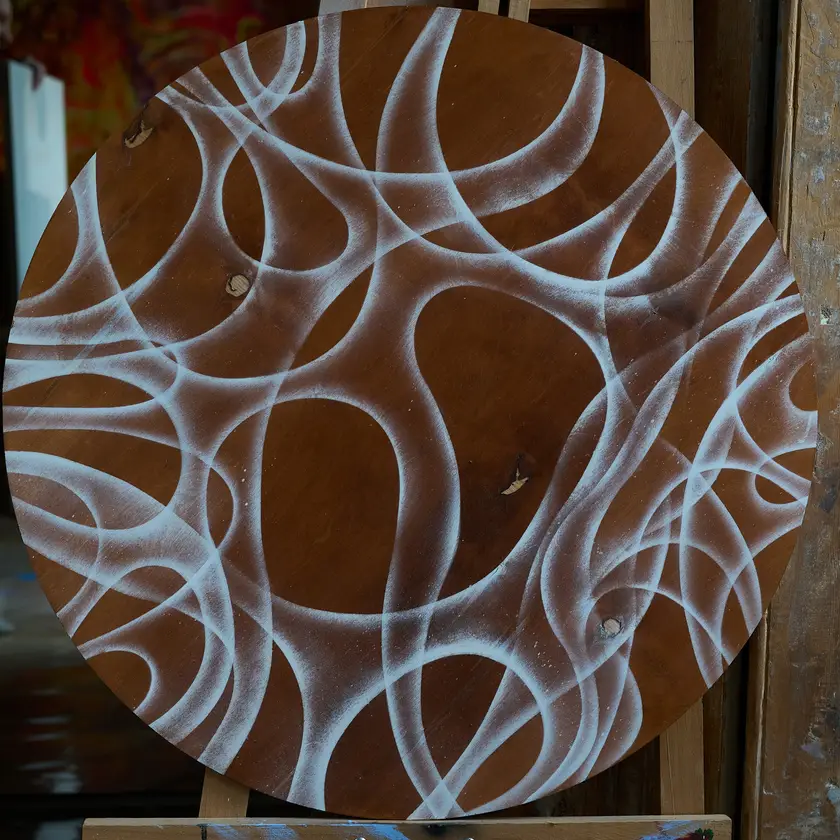
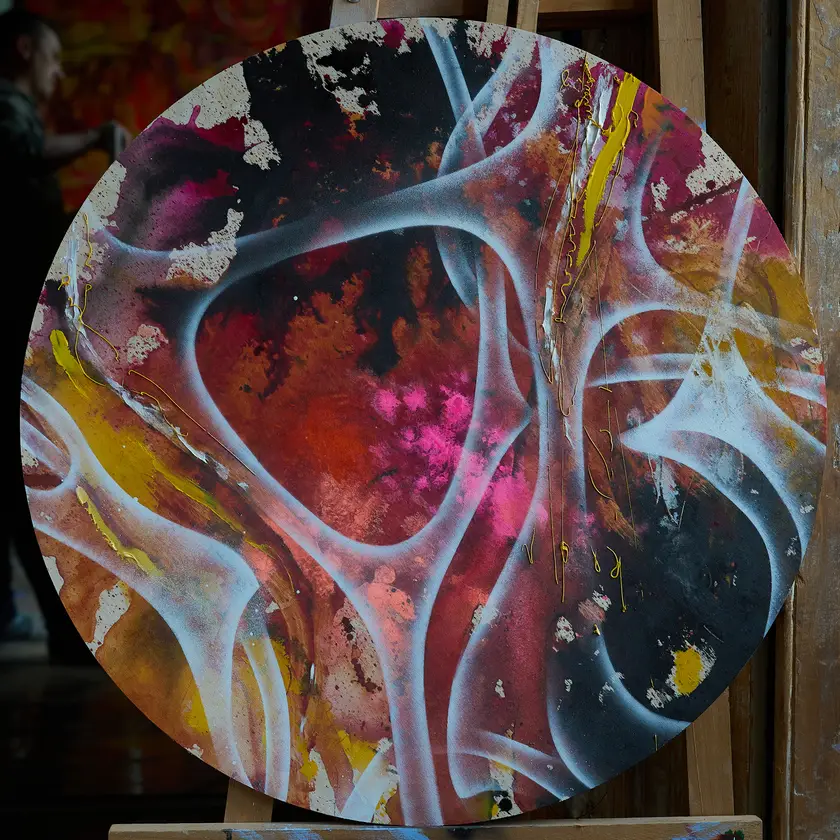
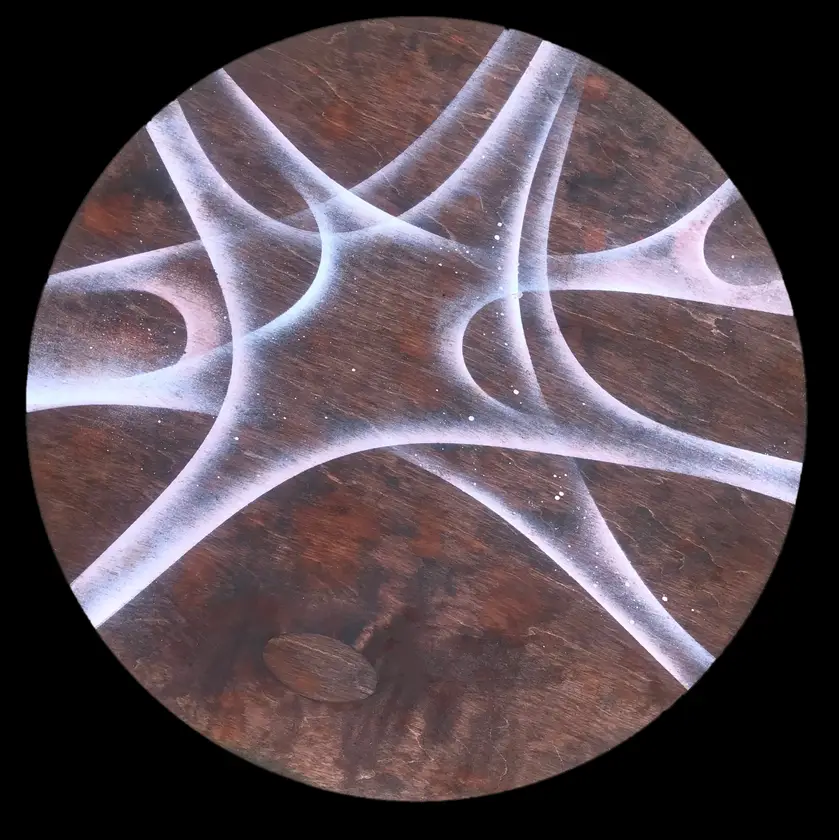
What do you see in this artwork?
Contribute your perspective to the community & earn rewards. Leave your reflection below.
Iron oxide and cadmium orange pigments, acrylics on burlap
Yanar Dagh in Azerbaijani means "burning mountain". It is a natural gas fire which blazes continuously on a sandstone hillside on the Absheron Peninsula on the Caspian Sea near Baku. Flames burn up to 3 metres in the air. The dance of fire.
Zoroastrianism in Azerbaijan goes back to the first millennium BC or earlier and was the predominant religion of Greater Iran before the conversion to Islam
Today the religion, culture, and traditions of Zoroastrianism remain highly respected in Azerbaijan, and the new year Nowruz continues to be one of the main holidays in the country. Zoroastrianism has left a deep mark on the history of Azerbaijan. Traces of the religion are still visible in Surakhany, Khinalyg, and Yanar Dag. Zoroastrians were always attracted by sites of naturally burning gas in the Absheron peninsula. German traveler Engelbert Kaempfer (1651-1716), who visited a number of places in North Azerbaijan, once wrote that there used to be seven sacred fires near Surakhani village, 30 km away from Baku, in Absheron peninsula: “… two fire-worshipping Indian newcomers, who were descendants of an ancient Persian tribe, used to sit motionless around a wall erected by them, pray to the eternal God, watch and bow to the fire coming out of the earth… previously, 500 meters away from here, one could see seven adjacent hollows from where this fire used to burn. After that flame died off, the fire emerged from the place that I described”.
Elnara Nasirli is an Azerbaijani contemporary artist whose practice explores the intersection of environmental technology, biotechnology, and the natural world. Working across installation, sculpture, painting, sound, collage, and mixed media, she creates biomorphic environments that examine relationships between human perception, ecological systems, memory, and transformation.
Drawing on organic structures and natural processes, Nasirli combines reclaimed and unconventional materials with technological and sensory elements. Sound, spatial interventions, and interactive components play an increasingly important role in her practice, transforming her works into evolving environments rather than static objects.
Her artistic research focuses on ecological awareness, resilience, regeneration, and the complex relationships between humans and other forms of life. Through immersive and multisensory experiences, Nasirli explores the boundaries between the natural and artificial, living and non-living, while inviting viewers to reconsider their perception of and connection to the environment.