Three questions to Yuliia Levytska

About Yuliia Levytska
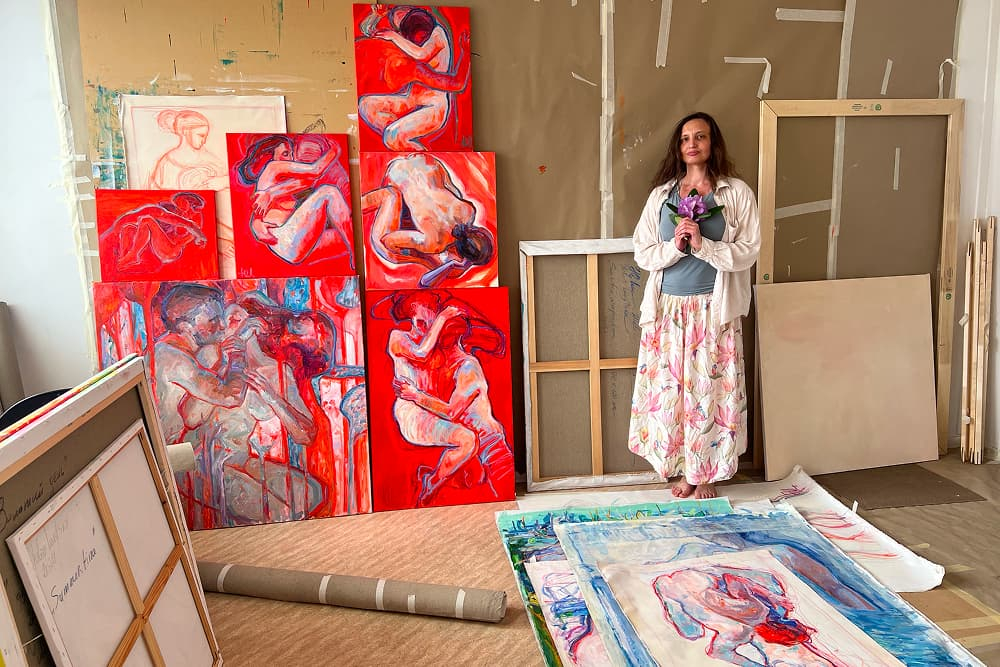
Yuliia Levytska is an Ukrainian artist originally from Kyiv, she currently lives and works in Kristianstad, Sweden, where she continues to develop her artistic practice and expand her ongoing series with new paintings.
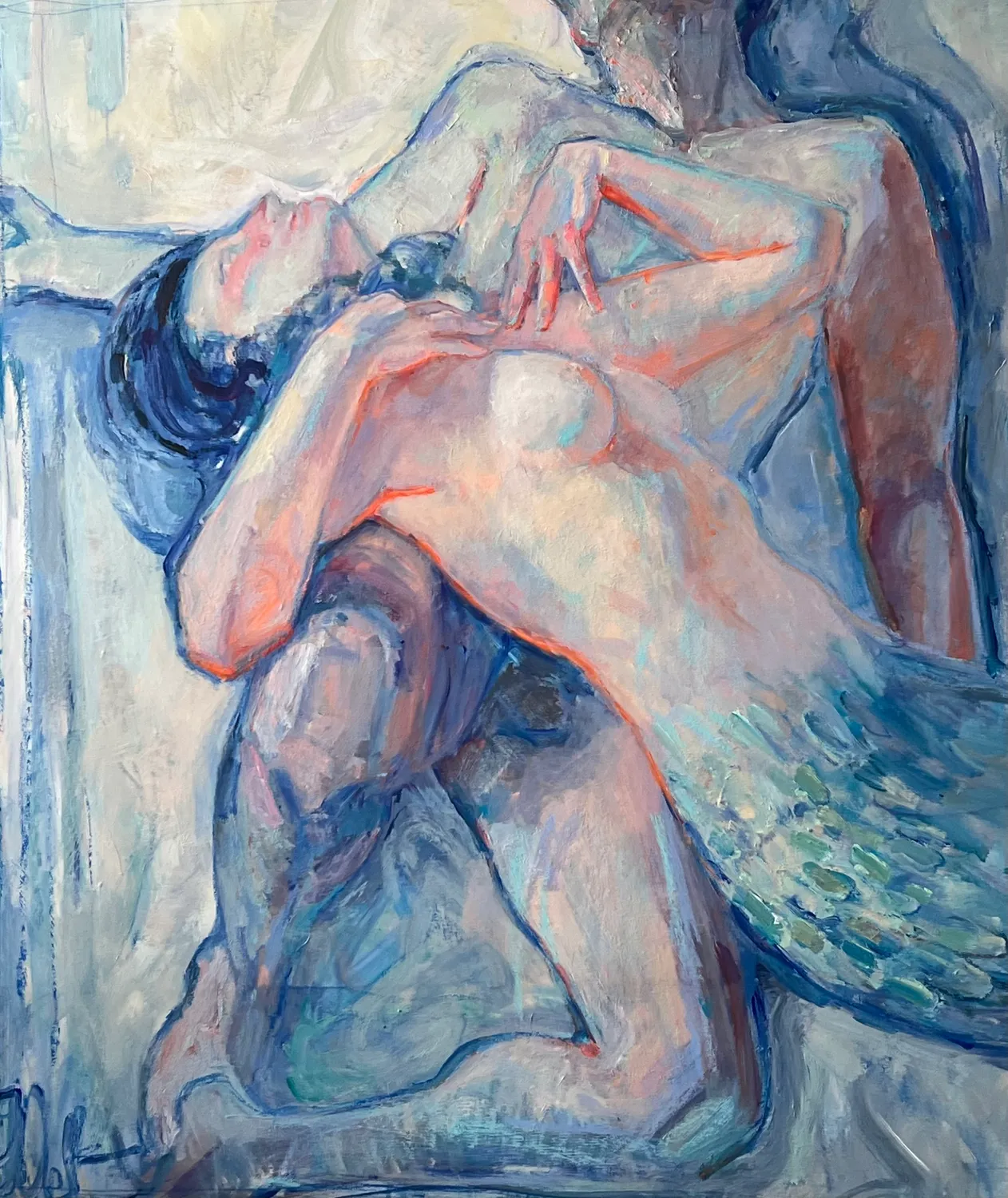
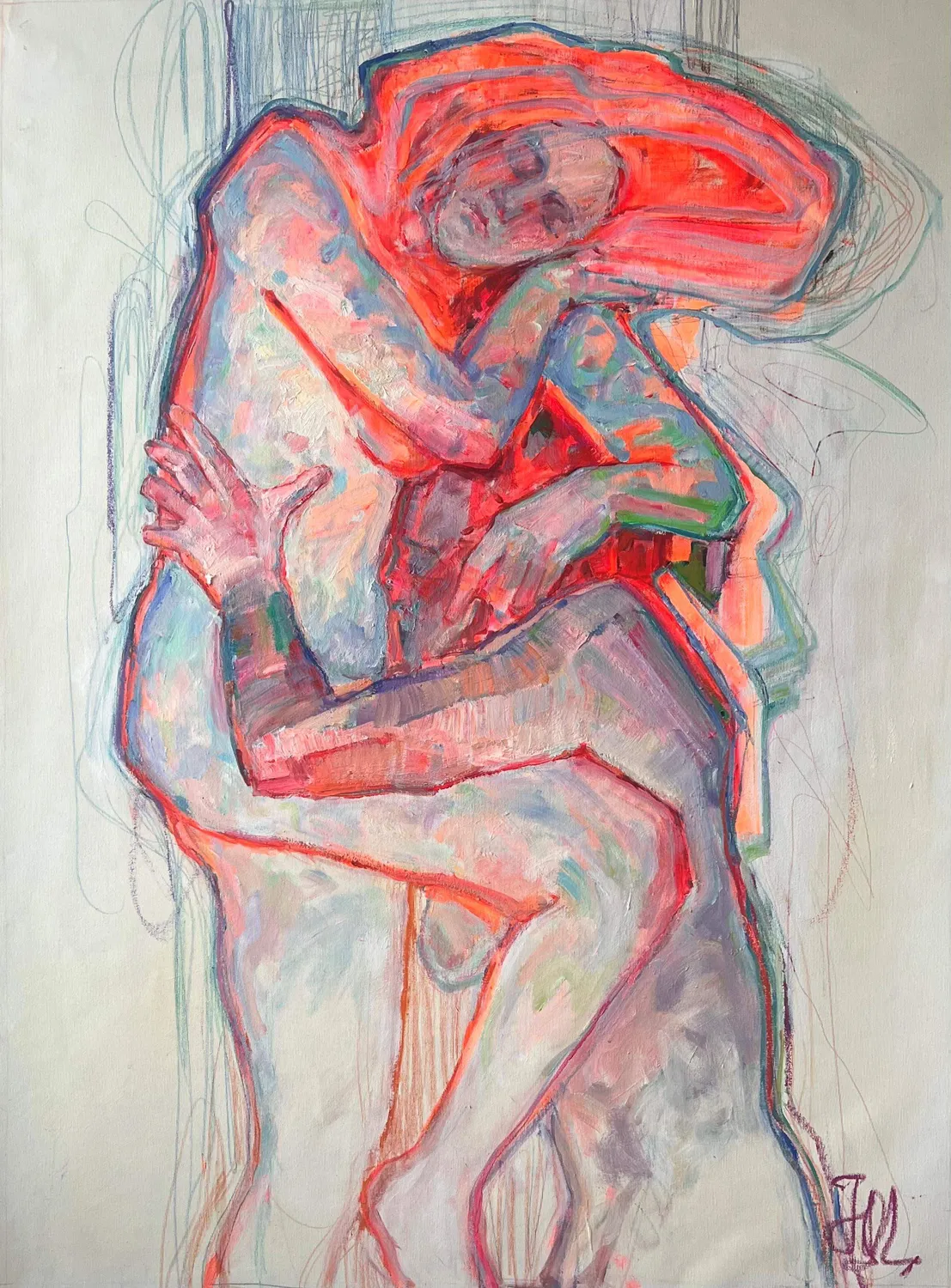
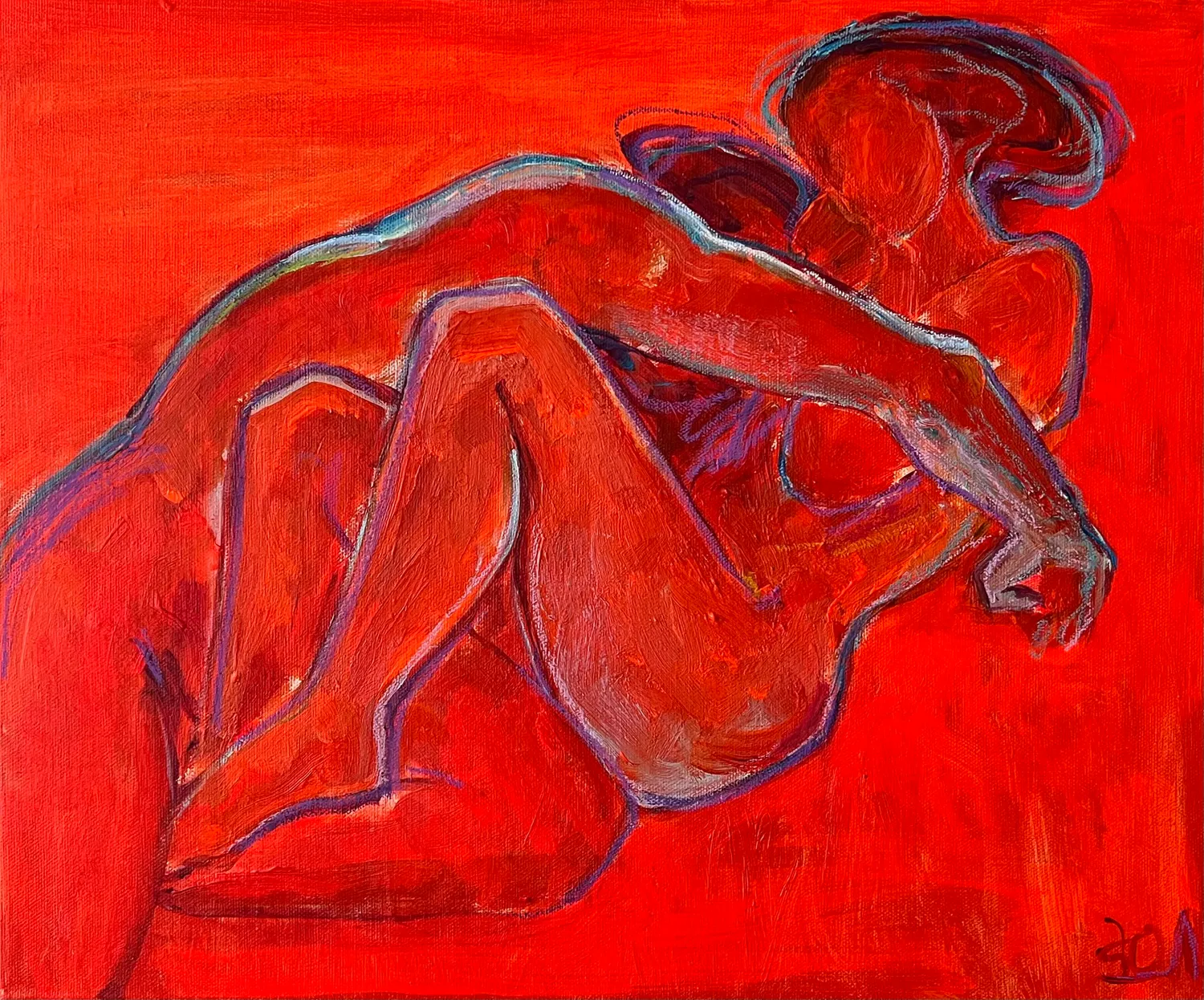
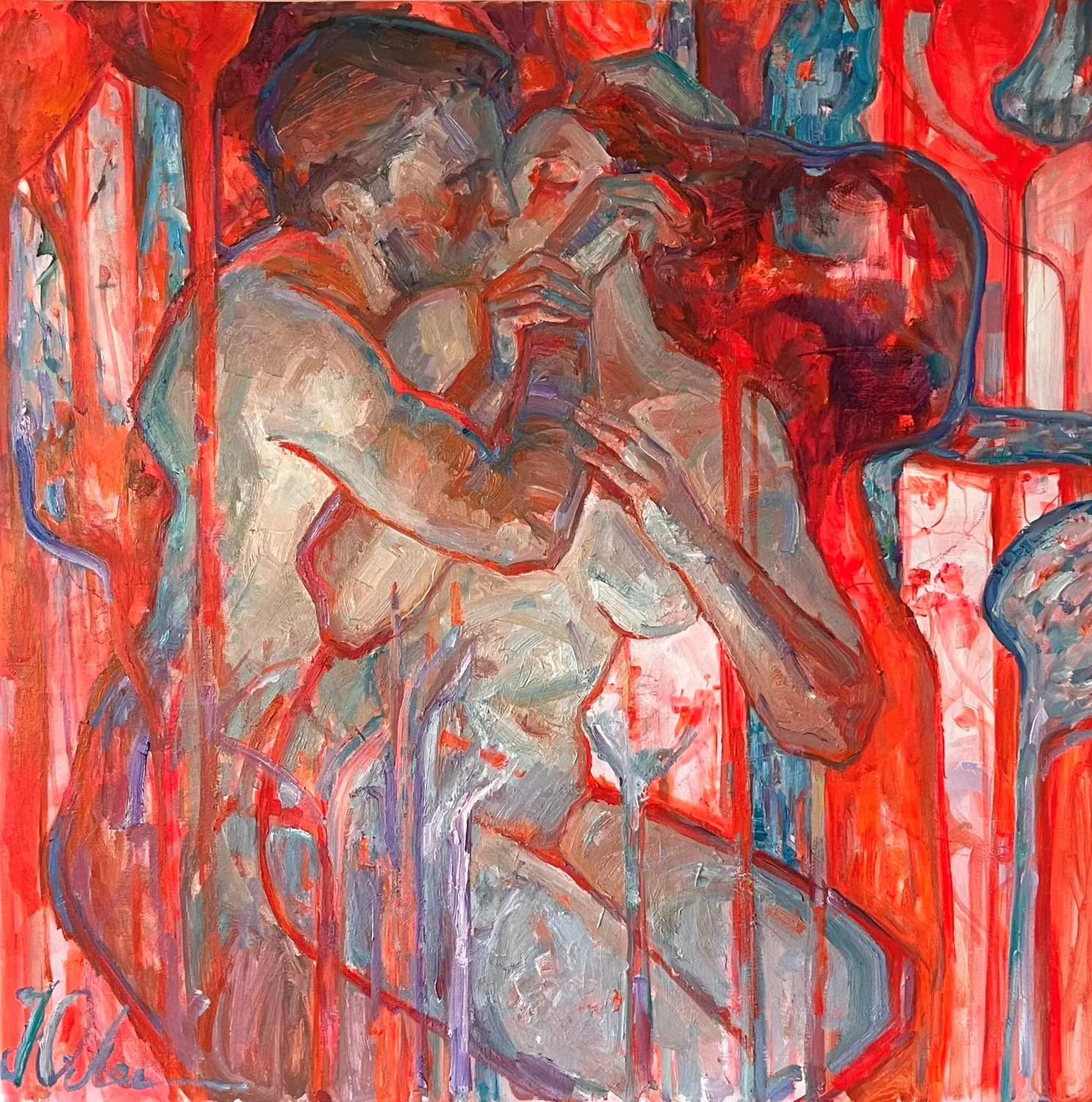
Her work explores intimate compositions and examines feelings, emotions, and the psychology of human relationships through the language of the body. Central to her practice is the question of how to convey passion, tenderness, longing, despair, the pain of loss, and other deeply human experiences through visual form.
Your paintings are filled with sensuality, sexuality, and emotional vulnerability. Why is physicality the most natural way for you to portray human relationships?
For me, the body is the most honest language we have. We can hide our thoughts and feelings behind words, but posture, gesture, touch, or even the distance between people often reveal much more. I'm not interested in nudity for its own sake, nor in eroticism for the sake of eroticism. What interests me is the moment when a person becomes vulnerable and authentic.
Your works almost always depict two people who seem to serve as a refuge for one another. How do you create this secluded "universe for two" on canvas, detached from all the surrounding chaos?
I'm interested in the moment when two people meet—the space that emerges between them. That is the state I try to capture. Often, the figures seem to dissolve into one another, and the boundaries between them become blurred.
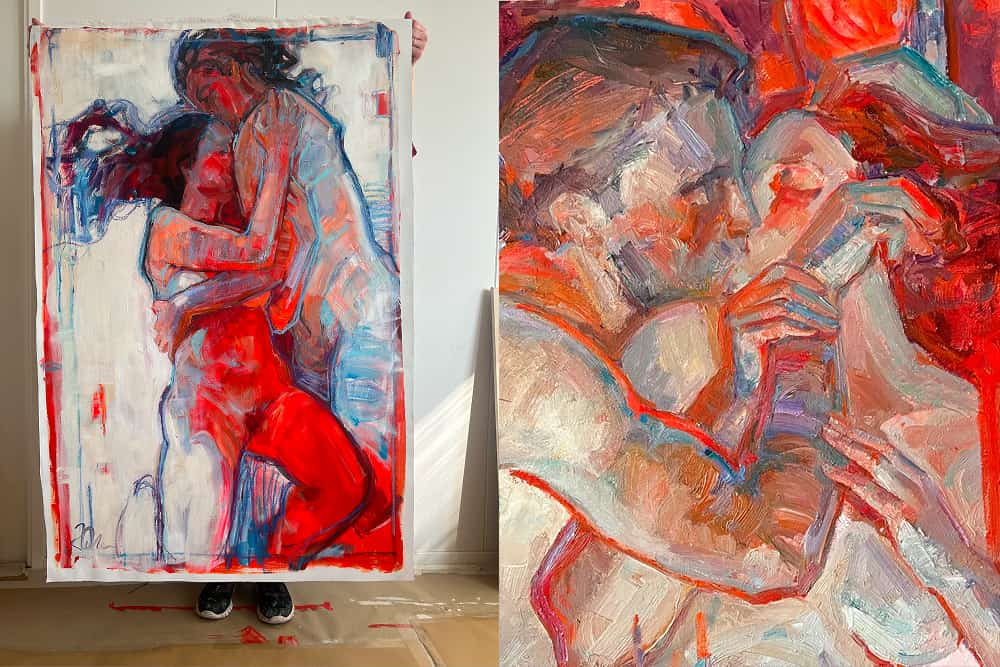
How has being forced to relocate because of the war affected your work, and do you think Ukrainian and Swedish audiences perceive themes of physicality, nudity, and eroticism differently?
When the familiar world around you falls apart, the need for closeness, support, and safety becomes especially acute. I think that's why my work has become even more focused on human connection and contact. Regardless of the country, people recognize the need for love and support in these paintings and connect with the emotions I try to convey. The language of the body is universal—it has no borders. I have followers of my figurative, sensual series both in Ukraine and abroad. Most of them are women.
What places from your childhood in Odesa do you remember most fondly?
Odesa is the beautiful city of my childhood and youth, but the places that stir the deepest sense of nostalgia belong entirely to the Ukrainian village where my mother was born. Holoskove, in the Mykolaiv region, the Southern Buh River, and the beautiful world that surrounded it all.
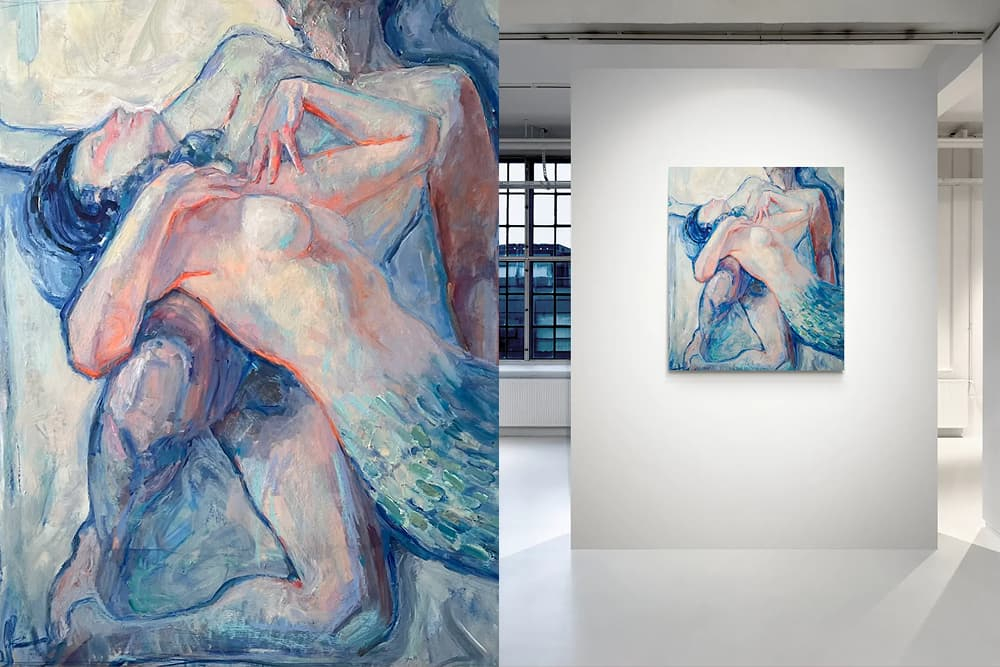
Tell us about your daily routine.
My routine is fairly simple. I spend a lot of time working on sketches, revisiting previous works, and searching for new compositions. When I can't be in the studio, I continue developing ideas and sketches at home. These days, I'm also very focused on maintaining my inner balance. To keep routine from becoming too routine, I make sure to engage with contemporary art, visit exhibitions, and read books that interest me—not necessarily books about artists.
What is the human body to you?
To me, the human body is memory and emotion. It carries lived experience, fears, desires, love, and loss. I see the body not as a form or an anatomical structure, but as a space where a person's inner state becomes visible.
Discover her works