Three questions to Frederico Ferreira

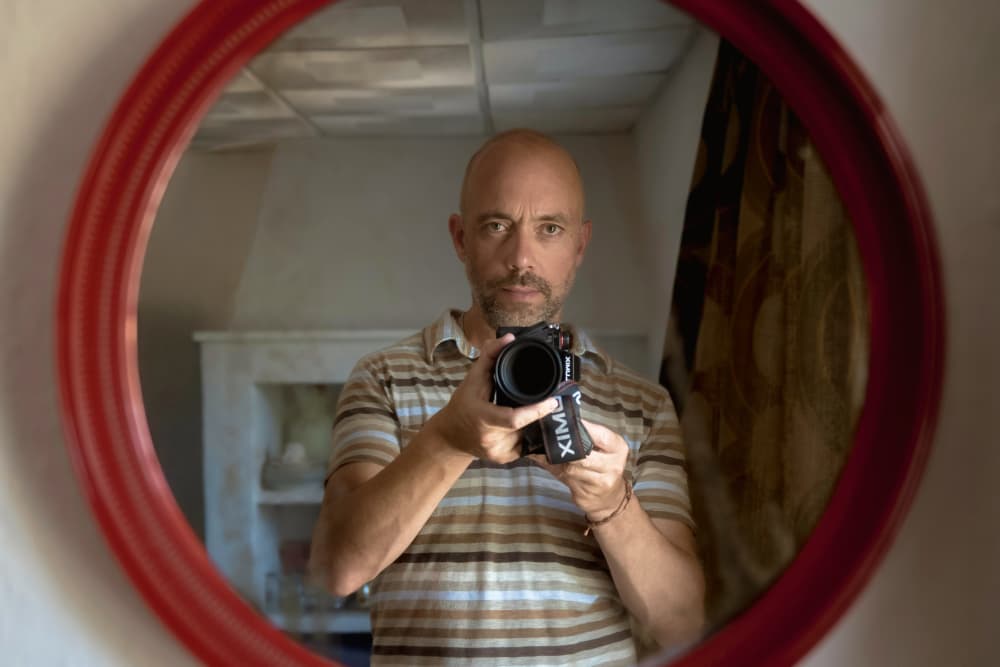
About Frederico Ferreira
Frederico Cordeiro Ferreira (Portugal, 1978) develops his artistic practice at the interdisciplinary connections of photography, film and writing, adopting a poetic language as a common thread and prioritising the importance of composition, perspective and subtext over artifice.
He has explored themes such as the human relationship with the time-space dichotomy and the asymmetries between territories, treating the presence of rurality and nostalgia as possible, unintentional autobiographical notes.
How did photography become your visual voice? And how do you evoke such poetry and quiet subtext within a single still frame, without relying on artificial effects?
If, in some way, I manage to convey that feeling through images, I feel satisfied; I am succeeding in communicating, and I see artistic work as a form of communication.
Composition and perspective are concepts I value highly in the way I look at my surroundings. In film projects (where I’ve been working for longer than in photography), I’ve been trying to pay increasing attention to each shot: whether it adds something and makes sense to include, or whether, on the contrary, it is merely serving as a crutch for a difficulty in moving the story forward. In this sense, photography has been a parallel exercise to film, with a strong shared aesthetic foundation, but a different challenge: to communicate within a single frame.
We live in an age of great artifice, but perhaps in contrast to the majority, I believe it is important to value the essential, the truth (even if it is less spectacular), and the way I try to photograph is an extension of that vision.
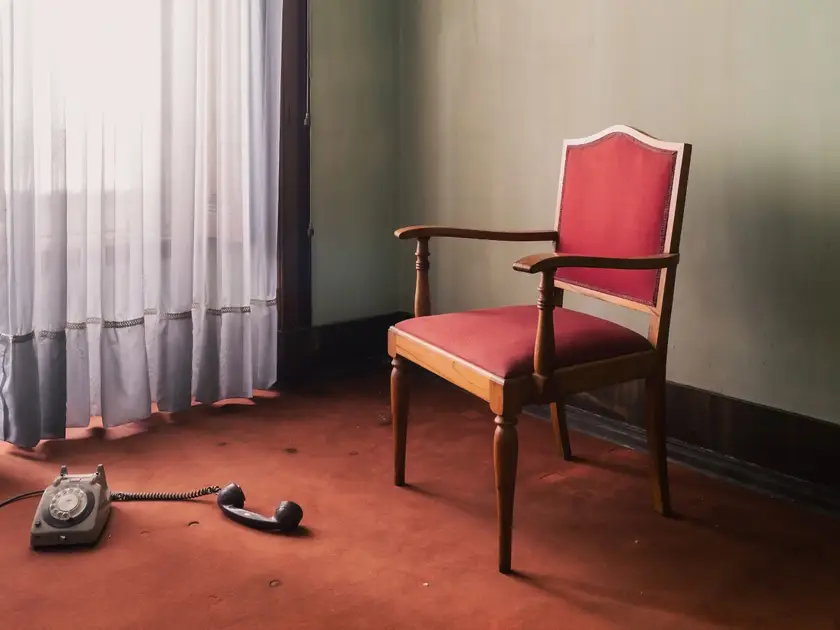
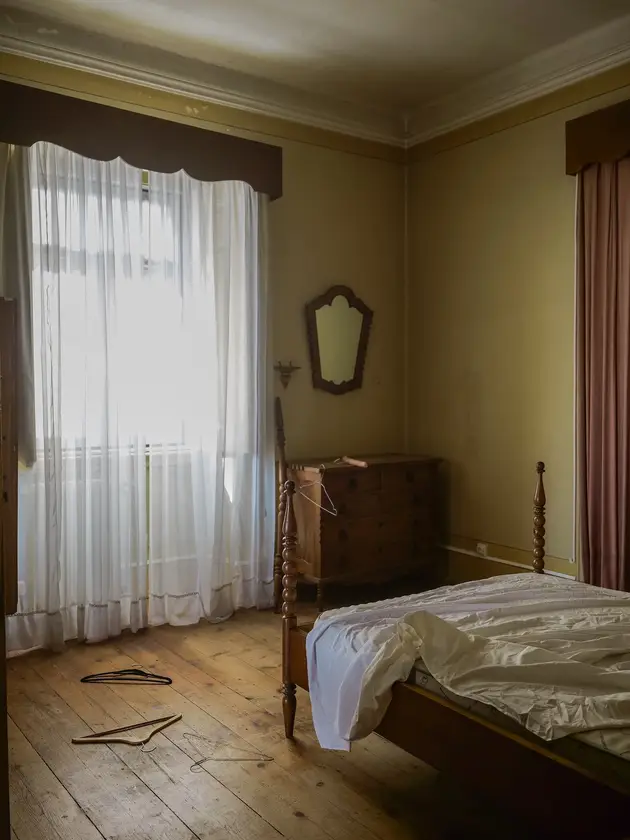
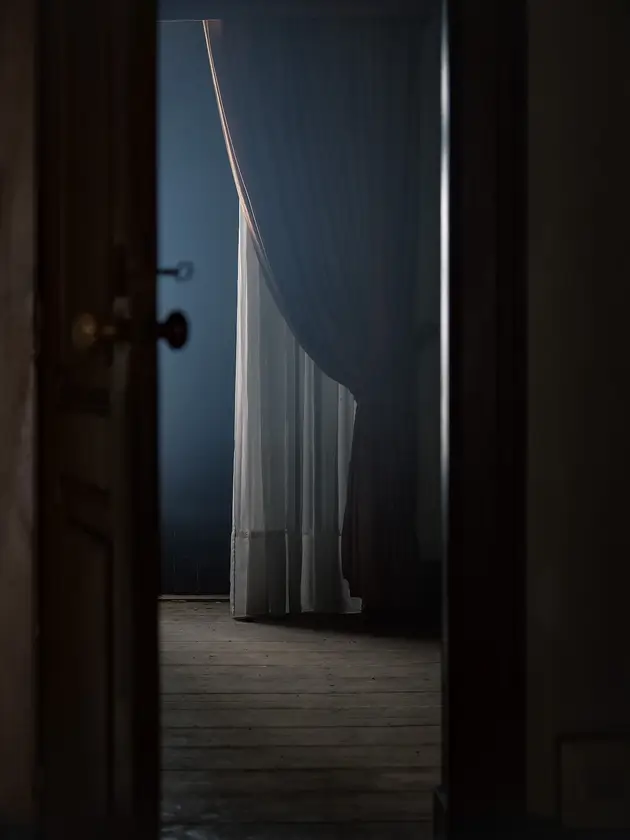
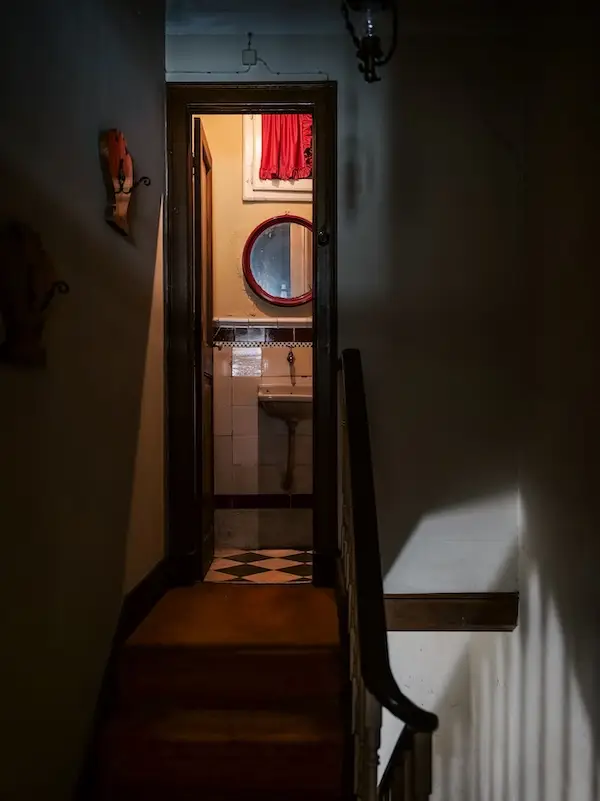
In your Unfurnishing series, you suggest that empty spaces can "suffer" in the absence of people. What is it about these rooms that conveys that sense of suffering, and how do you capture it in your photographs?
Spaces can also tell stories, without human figures and without words – at least not explicitly. Houses are not just buildings, they are an extension of those who live in them, often for a lifetime. When they are unoccupied (for various possible reasons), part of the lives of their former inhabitants seems to linger in those objects left behind, in those walls. ‘Unfurnishing’ is a poetic, rather than a documentary, understanding of reality. A surrealist foundation that leads me to view certain houses as settings that tell stories rather than the characters themselves. It is a project I began in 2022 and intend to continue.
With your photography, are you trying to tell a specific story, or do you prefer to leave the narrative open to the viewer's interpretation?
The artist always has a point of view, but I believe that the viewer should be given the freedom to form their own interpretation without being influenced, whether in photography or any other form of artistic expression. Overall, it seems to me that art lies neither in the object nor in the audience, but in the relationship that is established between the two.
(Extra) If you could invite any fictional character—from a novel, fairy tale, or animated film—for a cup of tea or a glass of wine, who would it be? What would you want to talk about—or perhaps simply sit and quietly contemplate together?
It wouldn’t be easy to choose a character – perhaps a character creator would be more appropriate. And, of the few who spring to mind, I might invite Wim Wenders, one of those who most impresses and moves me with his understanding of imagery, narrative and characters.
Discover his works