Three questions to Miora Acker

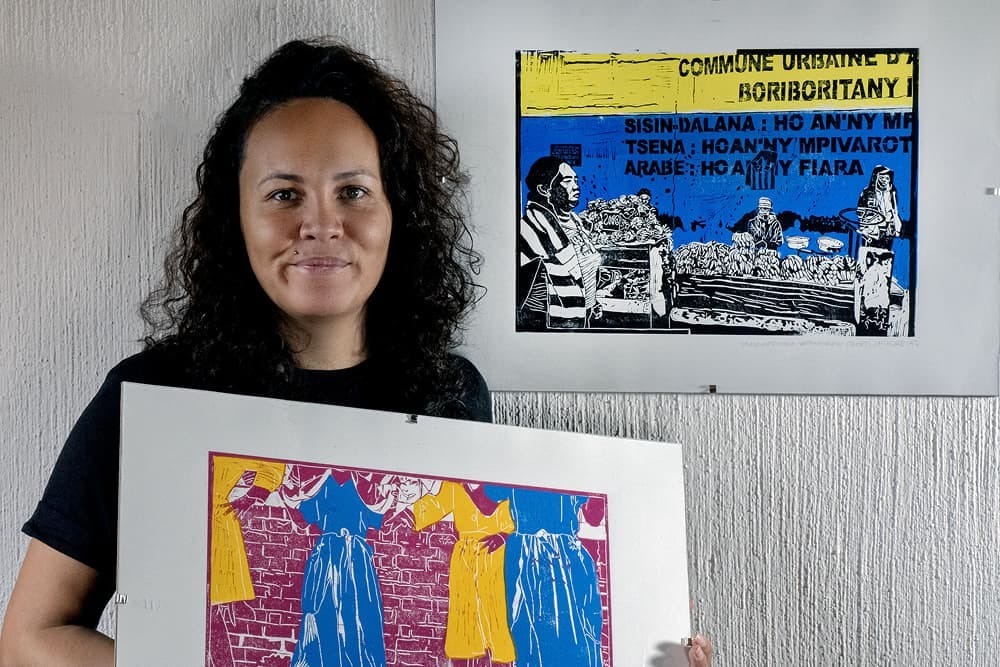
About Miora Acker
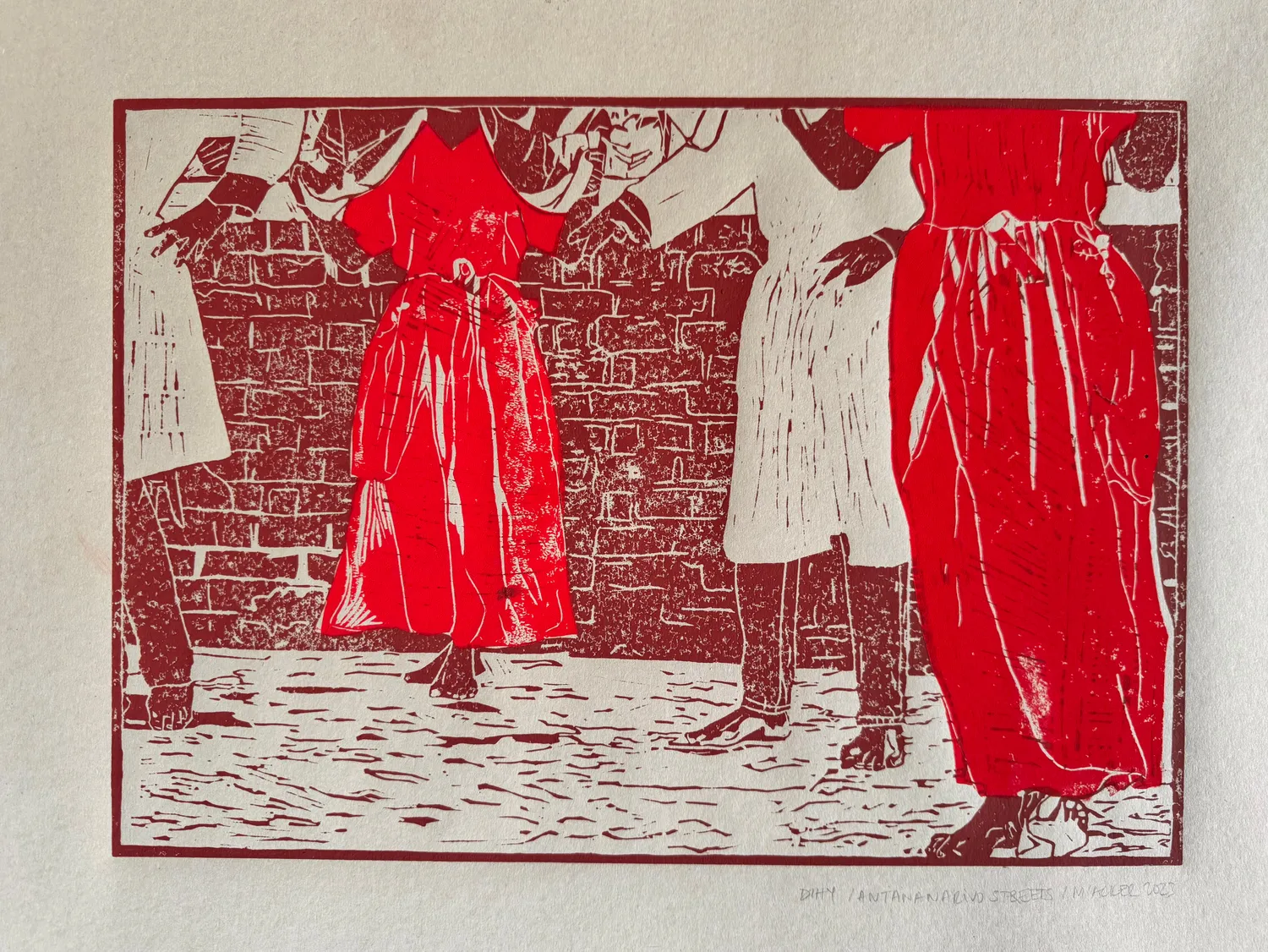
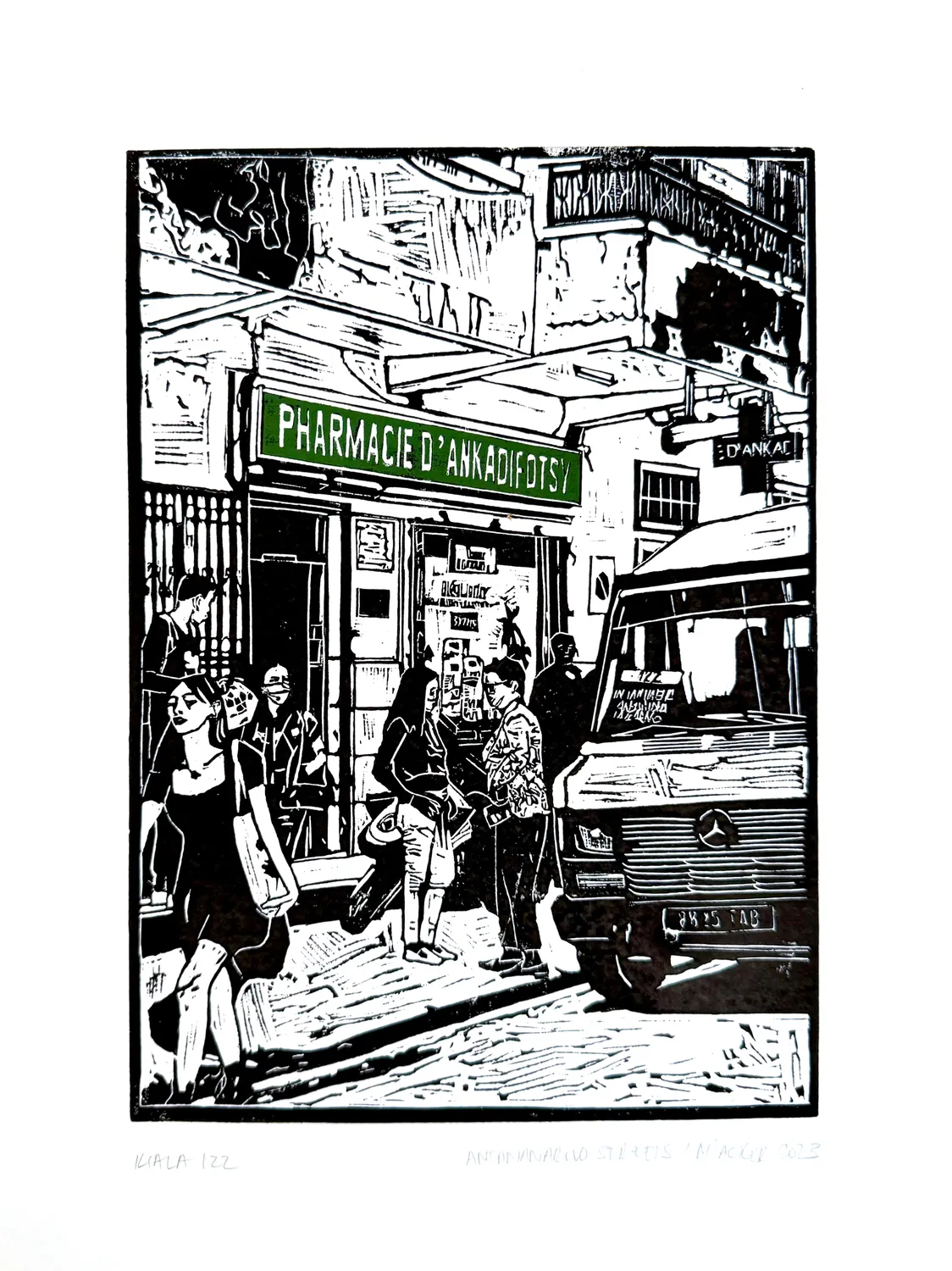
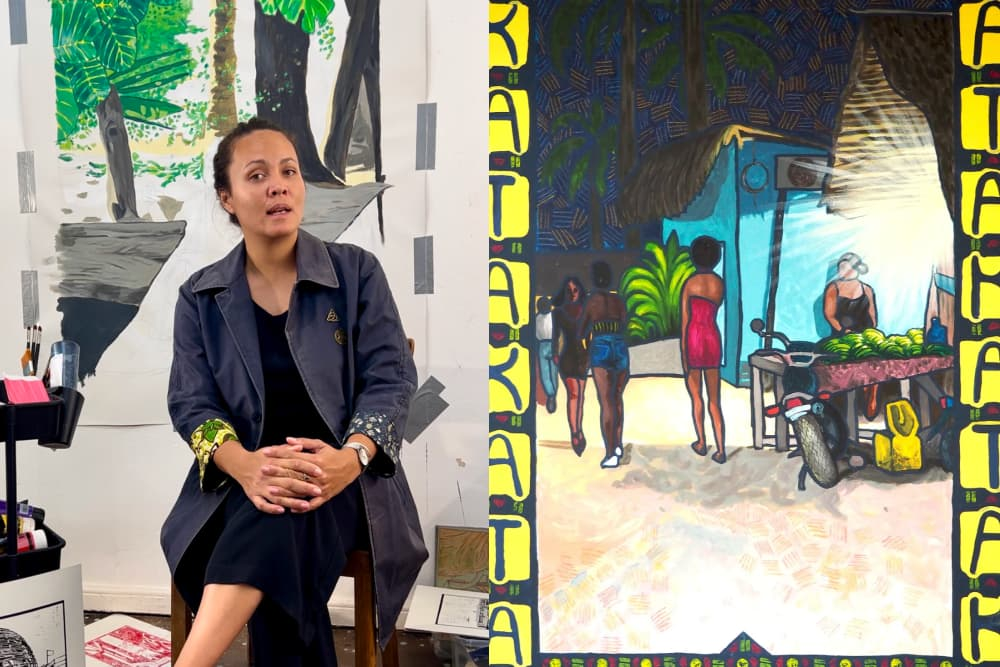
A word can be a joke, a memory, a cultural reference – or something entirely new. In Miora Acker’s work, it can also become part of the image. The Franco-Malagasy artist brings together painting, linocutting, and fragments of language to reflect on the world she knows: from everyday life in Madagascar to its history, cultural memory, and colonial legacy.
Now based in Berlin, Acker works between these different cultural and geographical perspectives, often using familiar scenes and invented words to question how places and people are represented. Her artworks are political without losing their sense of humour and poetry, using the details of ordinary life to explore broader questions.
When you start a new piece, what usually comes first: an image, a text, research, or a feeling?
First, inspiration strikes while I am on a walk, reading a book, or simply going about my daily life. It is mostly a feeling or an intuition. Then I get a flash of an image in my mind.
I start my work based on the images I captured during that moment of inspiration. As I work—whether painting or making a linocut—I create many sketches and studies. Then a theme comes to mind, and I start researching it, depending on the subject. The themes I cherish mostly revolve around Madagascar’s history and traditional practices and beliefs.
The research then shapes the creative process, through which I develop a kind of “standardisation” process. Eventually, this leads to the production of a series.
In your work, text and image inhabit the same space. How do you choose the words that become part of an artwork, and what do they add to the image?
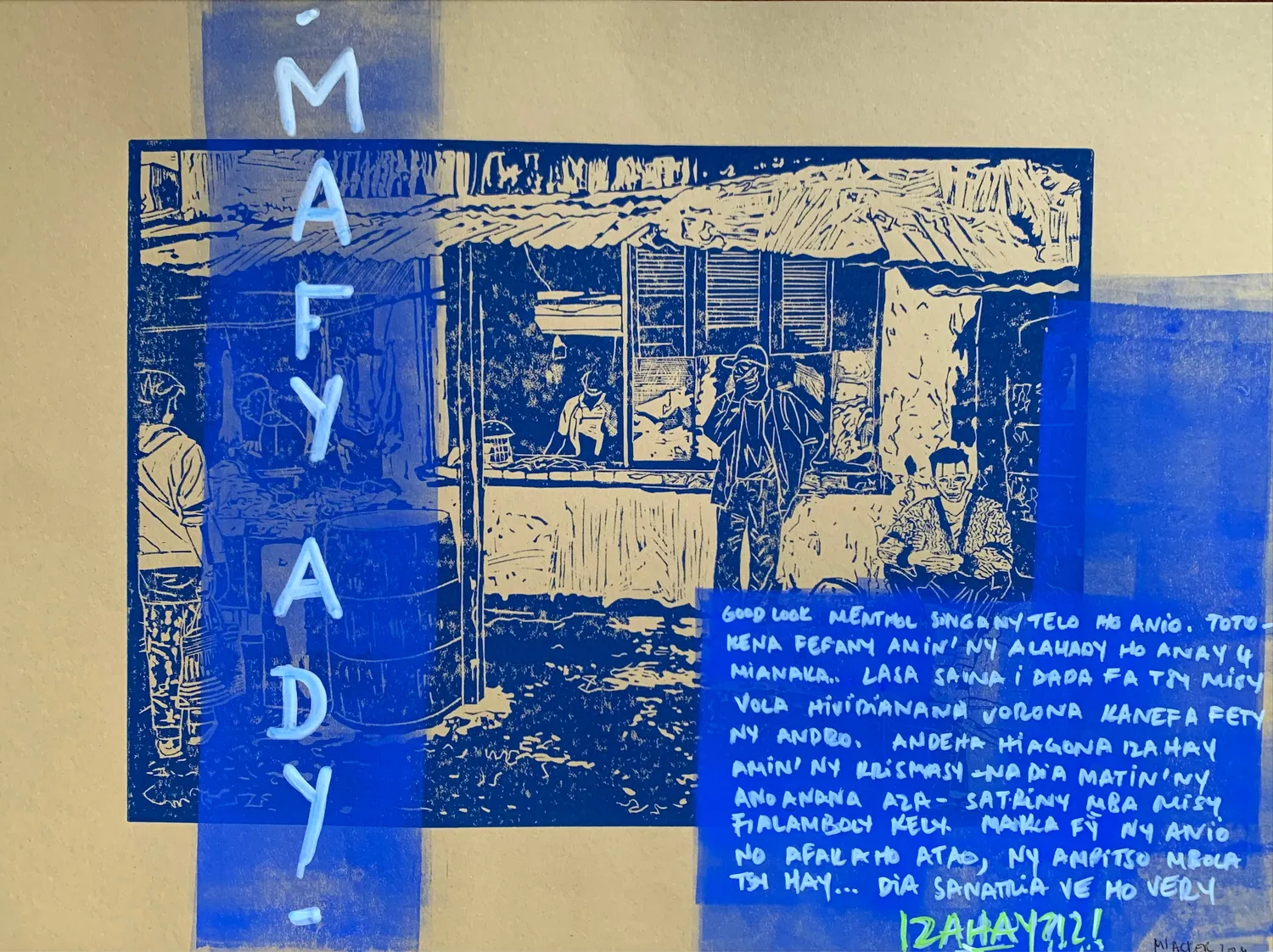
Words and images are complementary. This is the baseline of my work. The words are there to accompany the image and reinforce the overall mood of the artwork.
The words I use are not a narration of the image itself. They are words in their own right—words heard in daily life and commonly used in Madagascar, and therefore familiar; onomatopoeia; or new words that I create specifically for the artwork.
For example, in my painting Aperesaka, a man and a woman are shown sharing a bottle of beer while having a tremendously interesting discussion. Apéro in French means an aperitif or pre-dinner drink, while resaka in Malagasy means talk or discussion. I'll let you guess what the wordplay in “Aperesaka” is. This is just one example of the many words I have created for my artworks.
Is there something you once believed yourself, but that your own artistic practice ultimately made you reconsider?
As we grow, we naturally learn and change. I used to believe that “prostitutes” were the worst women ever, and that “prostitution” was the worst practice. Ha ha. Of course, society makes us believe this, among many other things.
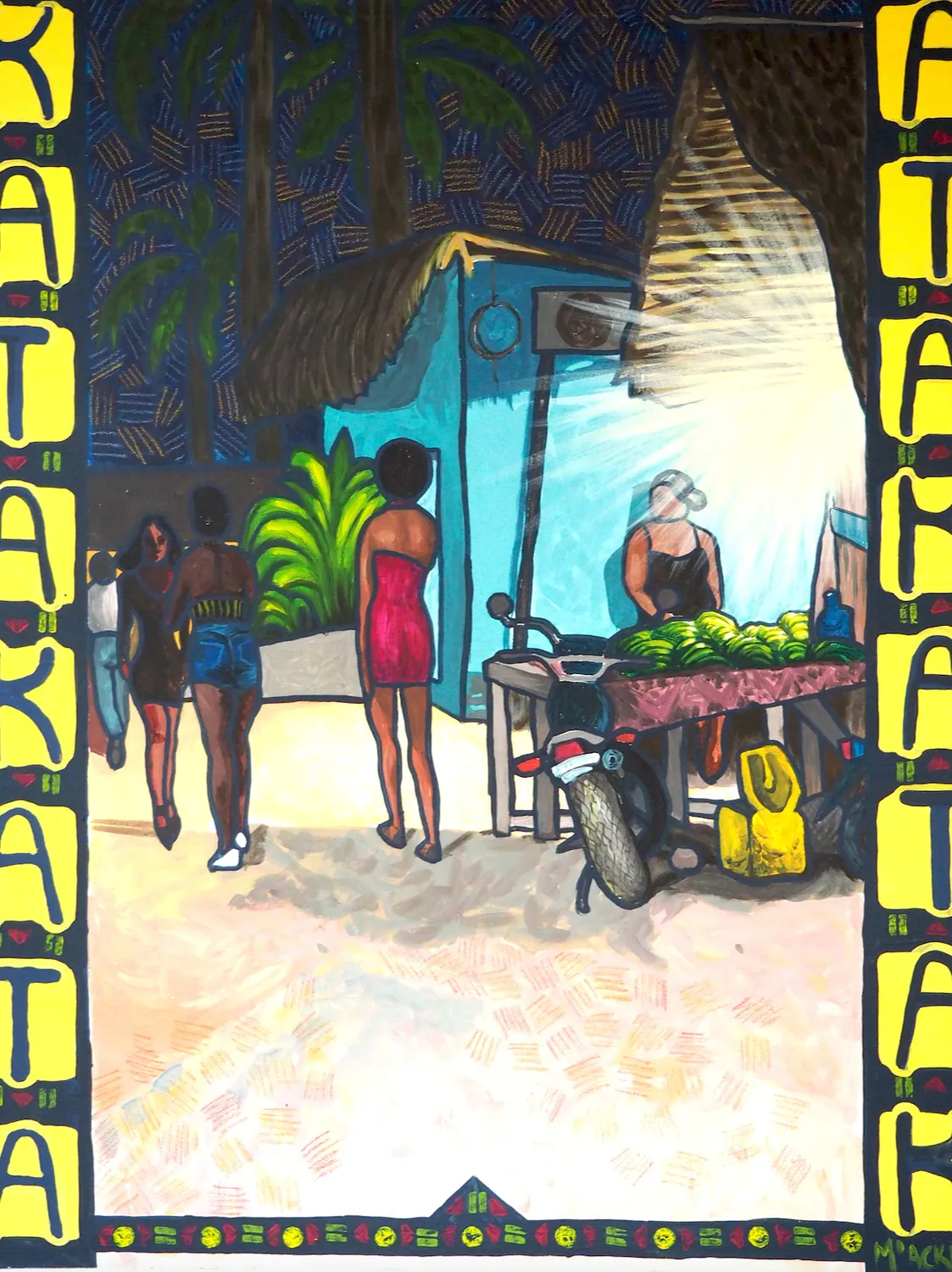
With my series Nos Belles, I went to a place in Madagascar where this practice is very common. I am not a fan of the word “prostitution.” Let’s say that, after doing my research and spending time with the people there, I came to realise that it was more of an exchange of services (when both are adults and no human trafficking is involved, of course): the lonely get company, and the company gets security.
And anyway, shouldn’t we be able to do whatever the hell we want with our bodies?
Extra: Describe Madagascar in one word and one color.
Phantasmagorical, Red
Discover her works