7 Best Online Art Marketplaces for Artists in 2026

We’d like to believe more people are getting interested in art. There are many ways to buy, sell, and discover it now, but choosing a platform can be hard when you’re new to the art world or still exploring.
Artists need a platform with an audience that can appreciate their work. Fees matter because commissions affect how much artists earn from a sale.
Buyers need safe payments and delivery, useful search tools, and an enjoyable way to browse. Choosing a piece to live with can feel like a big decision, especially for new collectors, thus ability to re-sell if preferences change is a crucial option.
We looked at 7 of the most popular platforms for selling and buying art, comparing features that matter to both artists and buyers.
Quick Comparison: The Best Online Art Marketplaces
- Subjektiv
- Best for: Original art and future resale
- Artist commission: 7% for direct sales; 30% for marketplace sales; 15% royalties
- Key features: Free listings, international delivery, digital ownership records, resales, royalties
- Peggy
- Best for: Social art discovery and collecting
- Artist commission: 20% for marketplace sales; 5% royalties
- Key features: Collector community, digital authentication, resale royalties
- Singulart
- Best for: Contemporary art and international exposure
- Artist commission: 50%, paid membership
- Key features: Art advisory services, international shipping, artist profiles
- Saatchi Art
- Best for: Original art and prints
- Artist commission: 40% on original artwork sales
- Key features: Global collector audience, art advisory, print sales
- Artfinder
- Best for: Independent artists and original art
- Artist commission: 40% to 50%, depending on plan
- Key features: Artist profiles, shipping support, promotional tools
- Artmajeur
- Best for: Original art and reproductions
- Artist commission: 35% for free accounts; 30% for Platinum accounts
- Key features: Online galleries, print-on-demand, international sales
- Fine Art America
- Best for: Prints and art merchandise
- Artist commission: Artist-set markup on eligible products
- Key features: Print-on-demand, home decor, apparel, digital downloads
1. Subjektiv
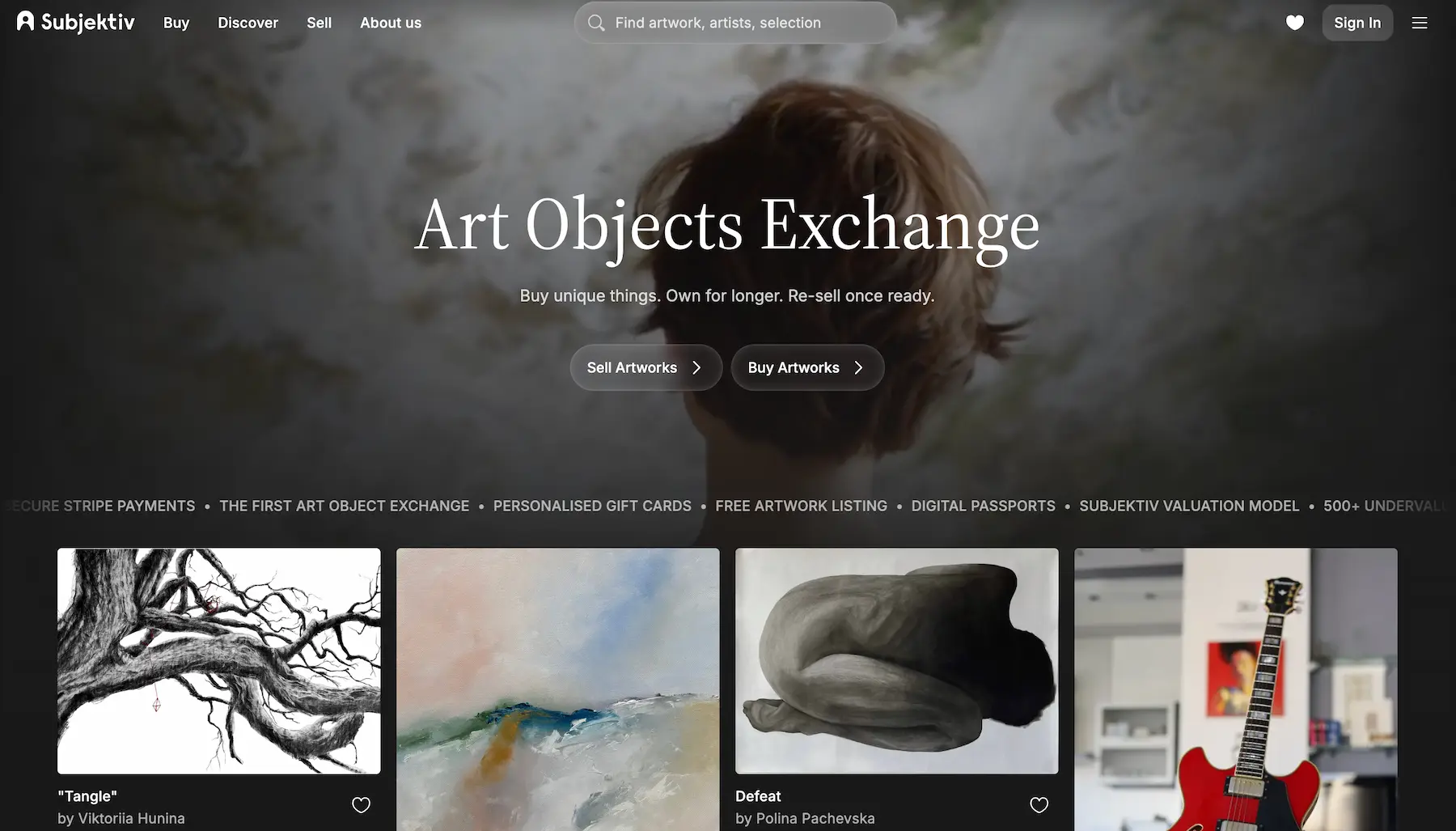
Artists can upload their work to Subjektiv and the platform then reviews each piece before it goes on sale. The artist can then choose to either list the work in the marketplace or bring in a buyer via a specific link or QR code.
The second option works well for sales that start elsewhere. An artist could put a QR code beside a painting at an exhibition or share a link on Instagram. If the buyer comes through that link, the commission is 7%. Marketplace sales carry a 30% commission. There’s no listing or subscription fee, and artists set their own prices.
Subjektiv records an artwork’s ownership history and price changes in a digital passport. When an eligible piece is resold for more than its previous price, the original artist can receive 15% of the increase. The collector gets a record of the artwork’s history, and the artist benefits if its value rises.
There’s plenty for buyers to explore. Selections from Subjektiv and guest curators help narrow the search by mood, price, or season.
The catalogue includes paintings, photography, drawings, ceramics, sculpture, and other physical art. You can browse art for sale by style, medium, and price. That might mean looking for original modern art, abstract art, or original expressive and gestural paintings for sale. The platform offers original canvas paintings in different sizes, from small pieces and affordable art pieces to large or more expensive paintings. It also includes unique objects that owners can list themselves.
For buyers, there’s no fee on an initial purchase from an artist. An 8% buyer fee applies only to secondary market purchases. Artists and collectors can read Subjektiv’s current fee and ownership terms here.
There are also no auctions to make purchase decisions stress-free, transparent and fully secure.
Why consider Subjektiv in 2027?
For artists selling originals, Subjektiv brings direct sales, marketing promotions and resale records into one place. You can use the marketplace to meet new buyers or bring your own audience and pay the lower direct-sale commission while still getting a hassle-free management of your sale and royalties in the future. Buyers can explore a range of original artworks and see its ownership history. These details make Subjektiv a platform to consider in 2027, whether you’re planning where to sell or looking for a piece to live with.Explore art for sale or find out how to sell paintings on Subjektiv.
2. Peggy
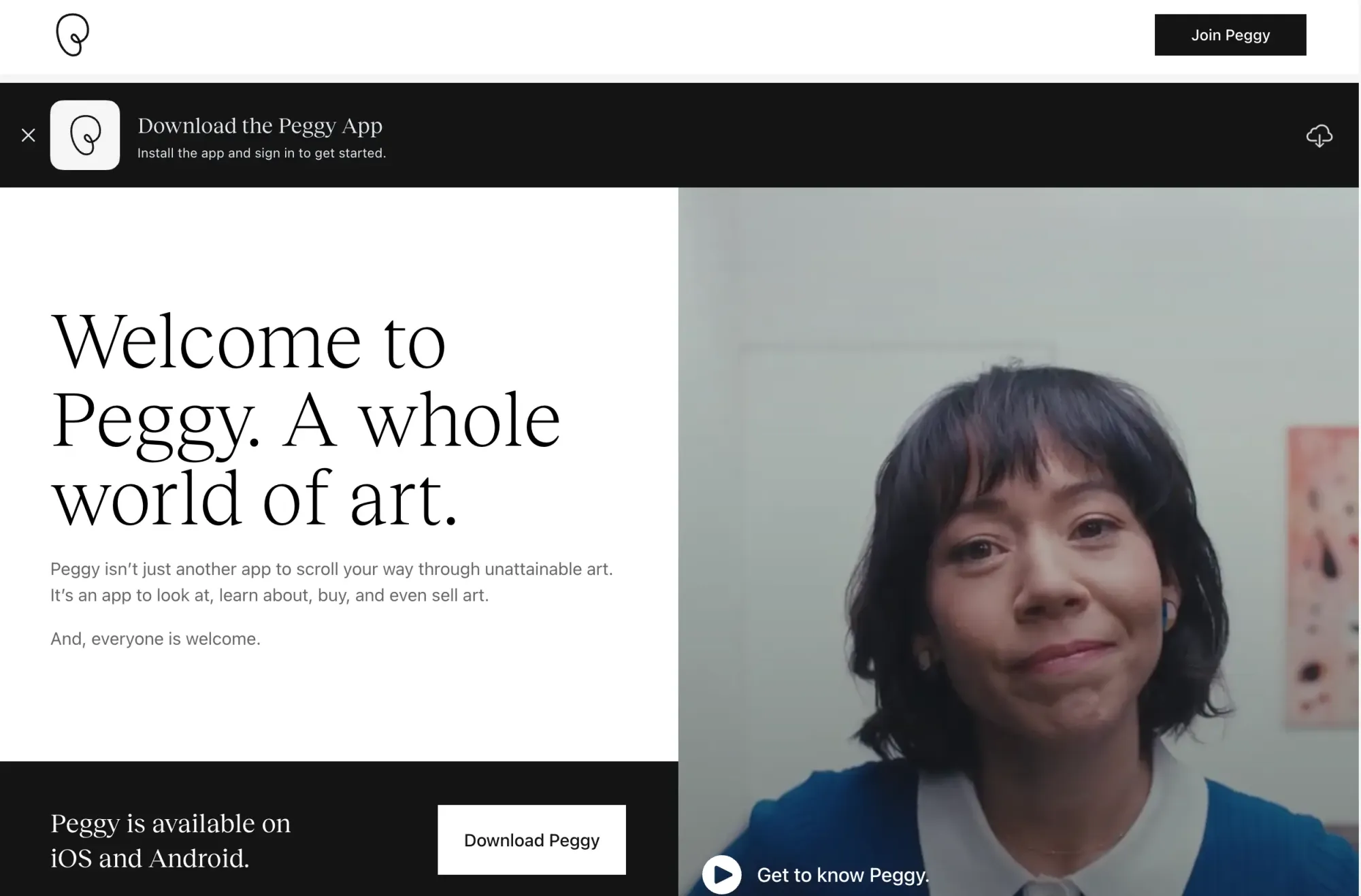
Peggy is built around the social side of collecting. Artists can create profiles, and collectors can follow them and organise artworks into Pegboards. Peggy’s digital fingerprinting tools authenticate eligible pieces and record their ownership. Artists pay a 20% commission on marketplace sales. If you already have a buyer, Peggy’s Send Invoice feature charges a 2.9% processing fee instead. On eligible resales, the artist receives a 5% royalty. Buyers pay a 25% fee on those secondary-market sales. Peggy explains its current terms and artwork eligibility in its artist pricing information and help centre.
Collectors can use the social features to find artists and organise the work they like. Authentication and ownership records also let buyers document a purchase and track a piece if it is resold.
3. Singulart
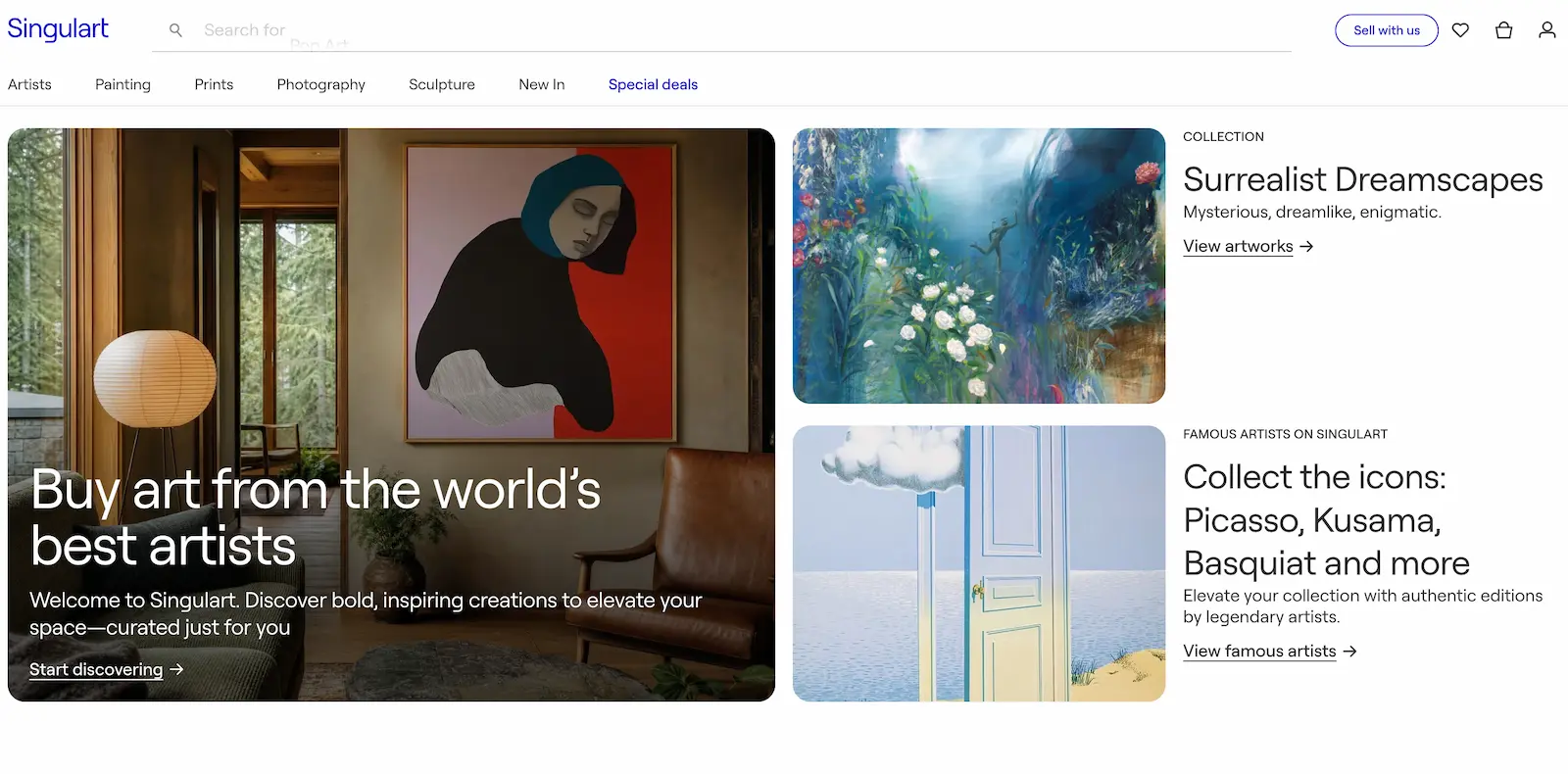
Singulart suits artists who want help reaching international buyers. Its art advisors work with collectors, and its logistics team can help coordinate shipping, customs, insurance, and paperwork.
The commission is 50% on completed sales, and there is a paid membership available.
Buyers can browse by style, size, and price or ask for help choosing a piece. Singulart says its artworks come with certificates of authenticity and offers a 30-day return period. This may help when buying from an artist in another country or making a first art purchase online.
4. Saatchi Art
Saatchi Art gives artists a large online gallery for original work and prints. Buyers can ask art advisors for help or use the “View in Room” tool to see selected piece in a space.
The commission on original artwork sales is 40%. Prints follow a separate model, and artists receive 60% of the profit after production costs. The platform sets out the details on its commission page.
Artists may find the gallery, editorial features, and art advisors useful for reaching collectors outside their network. Buyers can browse originals and prints in one place, with advice available when needed.
5. Artfinder
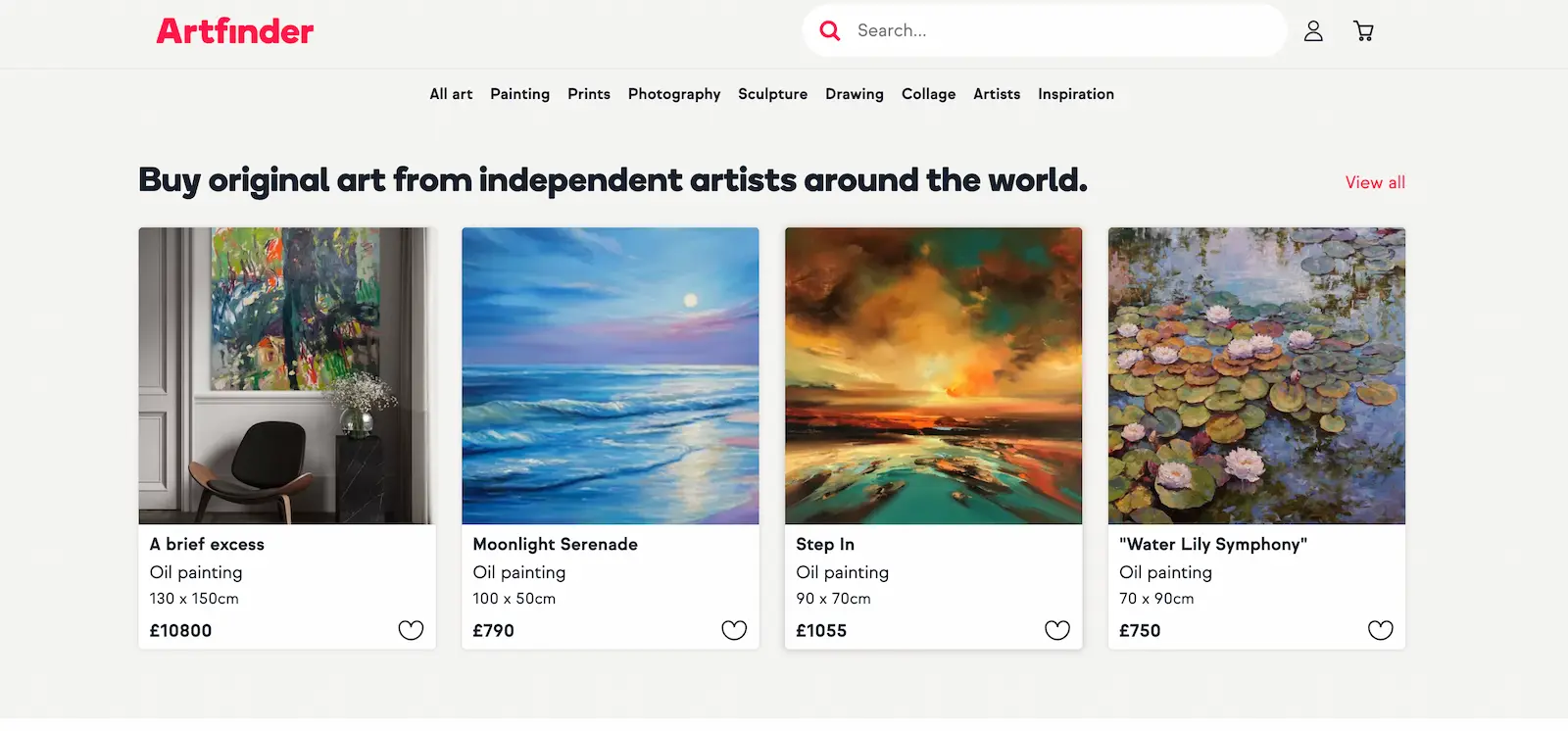
Artfinder focuses on original work by independent artists. Sellers can set up a shop, connect with buyers, and use managed shipping.
Artfinder offers three seller plans with different commissions and listing limits. Starter is free and charges a 50% commission. Core costs $14 per month and charges 45%. Premium costs $40 per month and charges 40%. Prices can vary by region. Artfinder lists current details on its seller plan page.
Buyers can browse artists’ shops and request a commissioned piece where available. Eligible purchases have a 14-day return period, and Artfinder arranges the return. Artists should compare the monthly fee with each plan’s listing limits and visibility features.
6. Artmajeur
Artists can use Artmajeur to create an online gallery and sell internationally. The published commission is 35% on a free account and 30% on a Platinum account. The platform offers print-on-demand for eligible artworks. Artists set the print royalties, while Artmajeur handles production and delivery. Its artist information page has the current terms.
Buyers can browse originals and reproductions by different artists and mediums. If you want an original, check the listing carefully. If you want a print, the platform can handle production and delivery, which may make ordering easier.
7. Fine Art America
Fine Art America is mainly a print-on-demand service. Artists upload images, choose products to sell, and set a markup above the platform’s base price. That base covers production, and the markup is the artist’s earnings.
Products include paper and canvas prints, framed art, home décor, and apparel. Fine Art America handles manufacturing and fulfillment and supports digital image licensing. Its fulfillment and pricing page explains how the model works.
Buyers can order an image in different sizes and formats. Fine Art America is a place to find affordable art prints but serves a different purpose than a marketplace focused on one-of-a-kind physical artworks.
Questions to ask before choosing a platform
Before you decide, think about what you want to sell, what you need help with, and what matters to you as a buyer. These questions might help you compare platforms.
What should you look for when choosing a platform to buy paintings?
Look for clear photos and descriptions, the artist’s background, the work’s size and materials, and the full price, including delivery where possible. For an original painting, check if it comes with a certificate of authenticity or other documentation. It’s also useful to know how payment, shipping, and returns work and who can help if a piece arrives damaged or differs from its listing. Inquire if the platform checks prices or provides its expert opinion.
If you’re comparing the best places to buy art online, think about the kind of work you want. A print-on-demand store may offer different formats and finishes. An original art marketplace tells you more about a unique piece and the person who made it.
What is the average commission charged by art platforms?
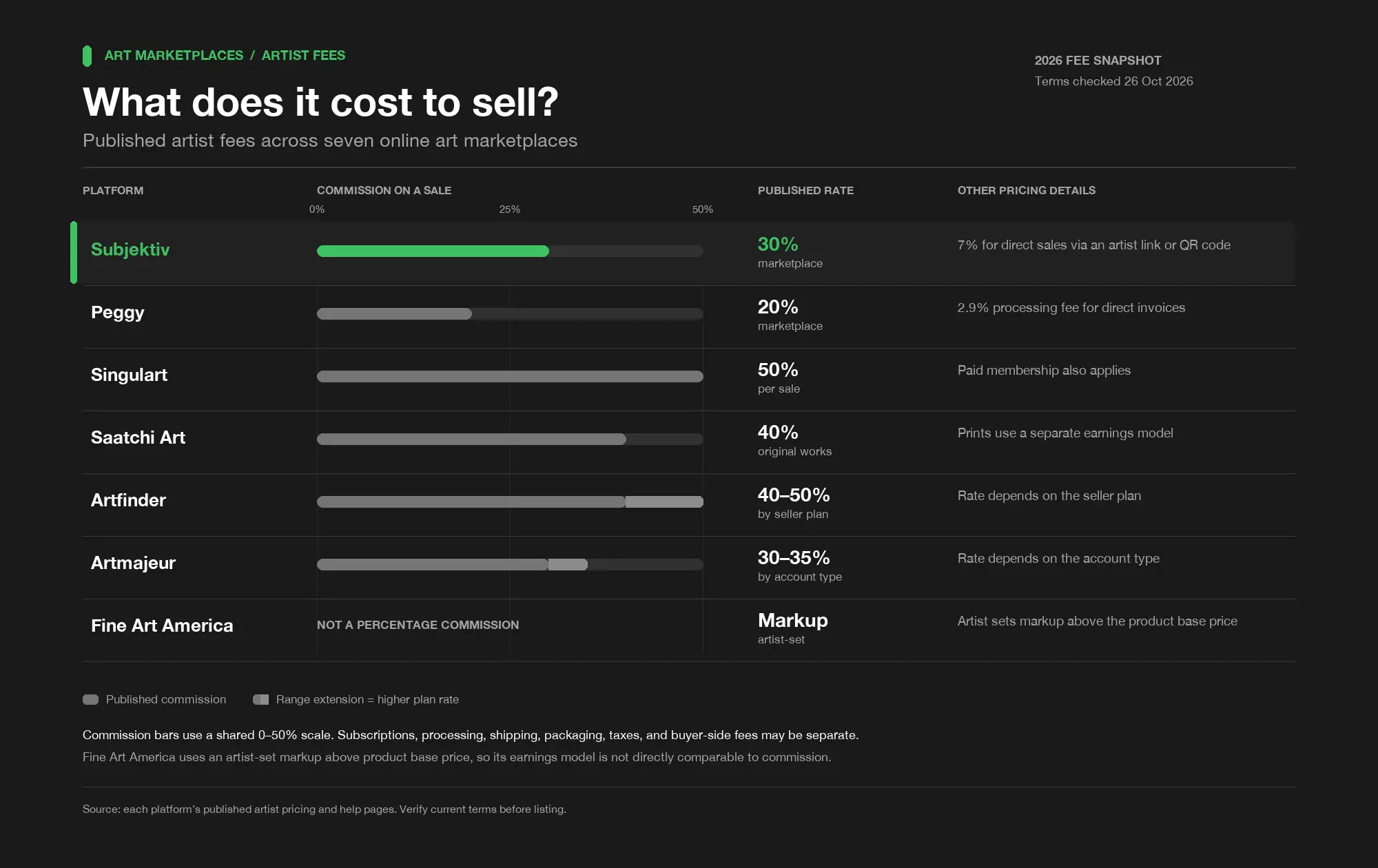
There isn’t one average that covers every pricing model. In this guide, marketplace commissions range from 20% on Peggy to 50% on Singulart. Artfinder charges 40% to 50%, Saatchi Art charges 40% on original artwork, and Artmajeur lists 30% to 35%. Subjektiv charges 7% on direct sales and 30% on marketplace sales. Fine Art America uses a markup model instead of a standard commission.
Compare the full cost, including subscriptions, payment processing, and any buyer fees on resales.
Can you list your artwork on multiple platforms simultaneously?
Often yes, as long as each platform permits it and you're compliant with their terms. It's a good way to get your work in front of a variety of different audiences by selling via multiple sites. Just remember to keep each listing up to date. As soon as a unique piece sells, remove it from the other sites.
What should a good art platform offer?
Look for clear fees, secure payment, reliable delivery, and useful records for both parties.
Subjektiv handles these in a practical way. Artists can opt for marketplace sales or direct sales via links/QR codes. There's no listing fee, and the commission for each route is published transparently. The curation helps buyers find artists. The platform handles the payment processing, and the digital passport tracks ownership and price changes. Artists are entitled to a 15% royalty on the increase in value of qualifying resales. Buyers can view the original physical artwork and see the ownership history. All of this is important if you care about how every piece is discovered, sold, and documented over time.
Final thoughts
The right platform is going to be one that's appropriate for what you're making and how you want to sell it. Fine Art America focuses on prints and products. Saatchi Art, Singulart, Artfinder, and Artmajeur all offer different pathways to original artworks. Peggy adds social discovery and resale tools.
Subjektiv may suit artists who sell originals through the marketplace and their own channels. Buyers can explore original work and see its recorded ownership history. Before choosing, compare the fees with the audience, tools, and support you actually need.