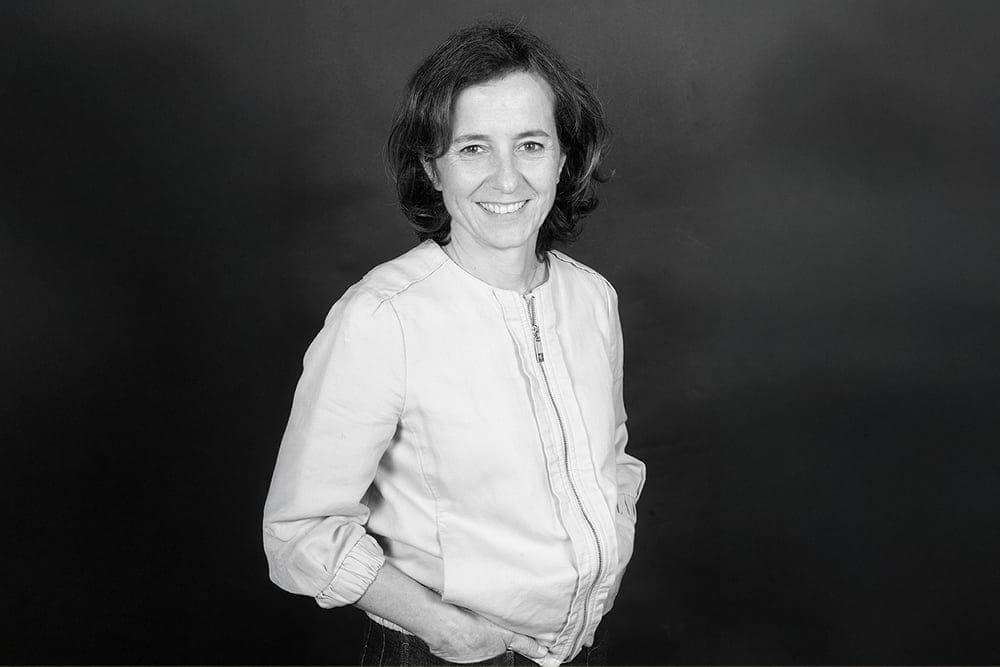
Three questions to Kateryna Serdiuk

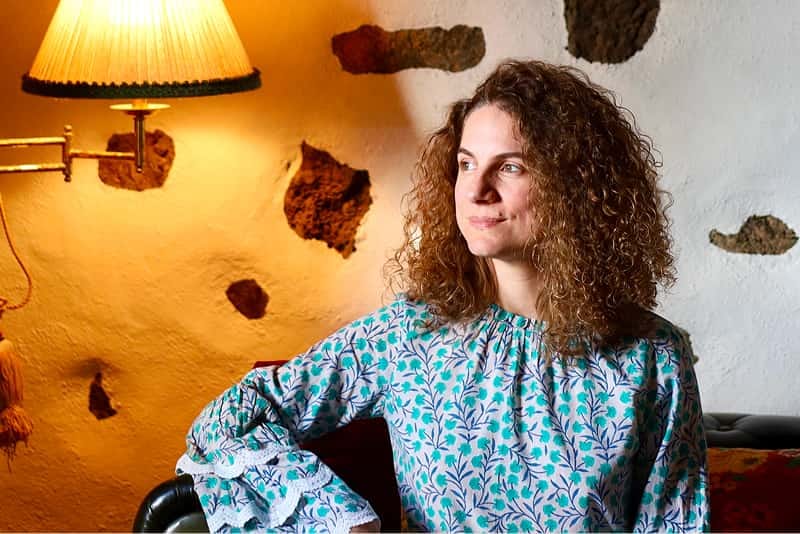
About Kateryna Serdiuk
Kateryna is the person behind Subjektiv. She came to art from a decade in international finance and a year working on healthcare reform in Ukraine. She built Subjektiv around one idea: we need to train our aesthetic lens to build a better world.
How did the idea of the Subjektiv platform emerge?
I grew up in Dnipro, Ukraine, in the 90s. It wasn’t exactly a place where aesthetic component of life was visible. It was a grey industrial city with lonely people. Even as a kid I was always trying to bring people together. I organised my kindergarten class to build snow castles, helped my classmates put together a Christmas book, and spent a lot of time thinking about how people live alongside one another.
Later, while studying in Madrid, those questions deepened. I discovered philosophy of Kant and Hannah Arendt. They explore how aesthetics help us to live better together, how it shapes and sharpens our judgement. It made sense to me in a way that felt very personal.
A few years on, I found myself standing in front of a painting in Japan — Sesshū Tōyō’s Haboku-Sansui. Something about its presence - the texture, the tenderness of the brushwork - stopped me in my tracks. That’s when I knew art wasn’t just a thing to look at. It was a way to connect, to feel, to belong.
That thread runs through everything I’ve done since, and it’s what led me to build Subjektiv.
What do you believe in?
I believe in Theoaesthetics.
In our postmodern world, after the horrors of the 20th century — some of which still cast shadows — we can hardly believe in any universal religious laws. God is dead, as Nietzsche famously proclaimed, and his words reverberated through societies, creating secular cultures.
We also no longer believe in a singular logic or Truth. As Heidegger showed, even the greatest reasoning minds can slip to the wrong side of history and support terrible things. The moral law within and the starry heavens above are no longer our compass.
So what are we left with, if ethics and truth are no longer discernible? We still have our intuition, informed by our senses. We are left with our aesthetic lens: the ability to differentiate beauty. It is our own subjective judgement (to decide what we like and what we don’t) that will help us to make aesthetic choices — in love, in work, in politics.
Why you should buy art?
First of all, to cultivate our own taste. Buying art trains your visual literacy. It teaches you to see more: to distinguish styles, forms, shades, emotions. Gradually, you sharpen your senses and acquire a clear aesthetic lens, which helps you to make much more informed decisions.
Secondly, to return to a more sensual and sustainable relationship with material things. Being unique and material, art holds a very different type of value - long-term, durable and symbolic. Thus it facilitates a different form of consumption, more sustainable and engaging, more focused on a forward-looking investment rather than an immediate disposable pleasure.
Thirdly, because art is a lot of fun. Art is the antidote to the mechanistic inelasticity of modern society. Every artwork’s originality and uniqueness creates a relief from the omnipresent sameness, AI slop and rigidity of thinking. Art is inherently free, versatile and erotic thus returning you the most seductive feeling of aliveness in its presence.