The Pure Magic of Colour Field Painting

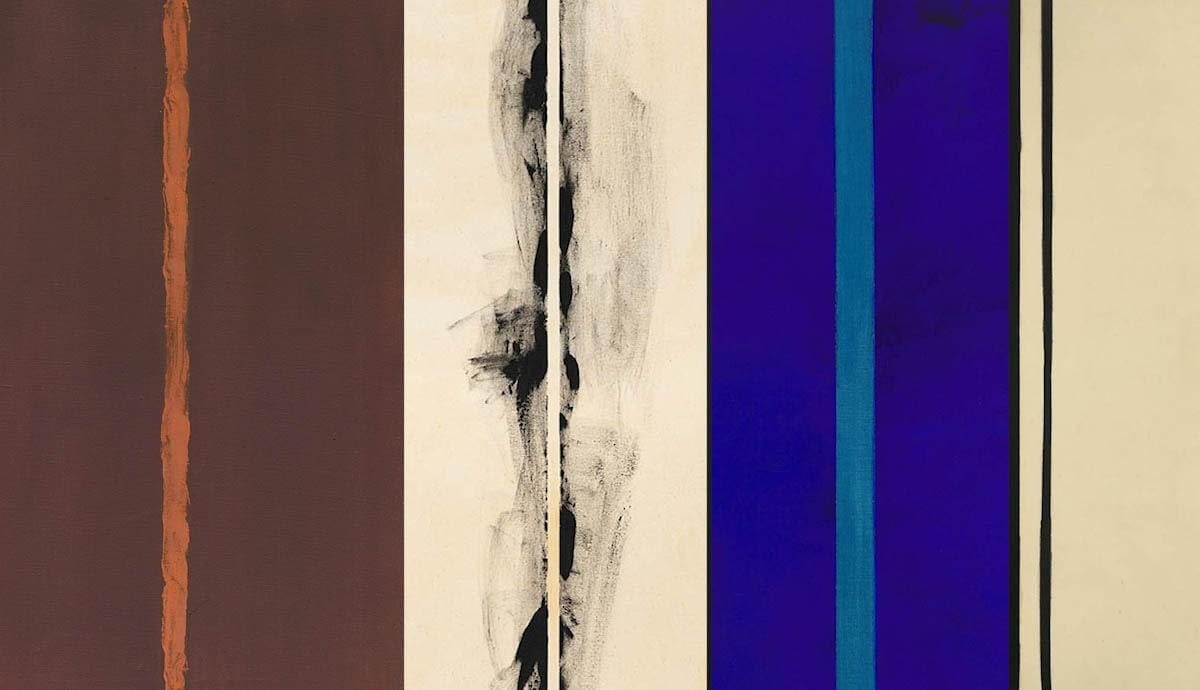
You are standing at the edge of the sea, watching the sunrise. Clear, salty water gently and quietly rolls toward your bare feet, the sand whispering beneath it. The sun slowly rises from the water, shifting the colours of the immense bowl of sea and sky every passing minute…It is quiet. Even the seagulls have not yet announced the beginning of the day. No sails have been raised on the moored sailboats. Ahead lies a bright, ringing day full of wonders. Can you picture it?
Now switch off your analytical mind and try to choose three colours that would convey your emotional state—and this entire landscape. But please—only three. This is precisely what artists working in Colour Field do.
Now imagine that this exact feeling can be preserved forever, accessible to you at any moment, whether you find yourself in a bustling metropolis, in an office, or in your own bedroom.
Colour as a Self-Sufficient Reality
This movement emerged in the mid-20th century. Artists sought to concentrate dynamism, emotion, and aesthetic experience in colour itself, rather than in narrative or the gesture of the brushstroke. And yet, when you look at the works of Mark Rothko or Clyfford Still, colour relationships alone can make you feel the movement—or even a sense of spatial depth.

These artists worked with the ideological and spiritual essence of their images, stepping beyond the boundaries of traditional artistic language and direct symbolism. For them, colour and simple abstract forms became an immediate and universal channel of contact with the viewer—something that touched emotions deeply and, at the same time, with refined precision.
The world of the 20th century was changing. After global wars and catastrophes, as often happens in history, a new aesthetic was needed—new meanings to hold onto. Colour Field artists offered these meanings, sacrificing symbolic imagery, dramatic realism, and literal representation for the sake of the profound, direct perception of the magic of colour.
Today, Colour Field Painting is primarily abstract art—or art at the threshold of abstraction, sometimes still carrying hints of realism. Yet its core qualities remain unchanged: minimalism of form, large monochromatic expanses, no detail or visual complication, apparent technical simplicity coupled with sophistication of colour relationships, and above all—attention to the emotional resonance of colour.
Such paintings aim to immerse the viewer in their own inner emotional landscape—a kind of meditative process. This is why works in this style are often large in scale, combining aesthetic restraint with emotional depth. It is like wordless music or a haiku poem.
When we contemplate beautiful representational art—say, by Vermeer, Cézanne, or even Monet—we all, more or less, see the same thing: a cathedral, flowers, a portrait. And thus we feel something similar. These works move us, yes, but we primarily sense the artist’s emotion rather than our own.
With abstract art, we are freed from storyline. Each of us can see and feel something uniquely personal. Colour Field is the very quintessence of such psychological communication between artist and viewer.
The Complex Simplicity of the Modern World
As for the present day, Colour Field art has not only become a universal language for conveying deep emotional states; it has also laid the foundation for new artistic movements: minimalism, conceptualism, neo-abstraction, and glitch art. Its ideas entered the 21st century with vigour and continue to develop in the hands of contemporary artists.
The minimalism of means and maximum expressiveness of these works make them equally at home in contemporary interiors and in the spaces of high (museum) art. This is how the psychology of colour works: any space that contains a Colour Field artwork begins to sound differently—resonating in unison with your own emotional choice.
If, like me, you live in a world overwhelmed by informational noise, logic, absurdity, anxiety, obligations, and the pressure of responsibility, you still can let your boat drift on the waters of free emotion—to feel the pure magic of colour and the connection with something larger than everyday life.
There are, of course, museum masterpieces available to you to admire, but more importantly, there are many extraordinary works of Colour Field Painting by talented contemporary artists, ready to become part of your own collection.
P.S.
Is Kazimir Malevich’s Suprematism a prototype of Colour Field Painting?