The Art of the Abyss: Exploring Famous Paintings of Hell for the Modern Home

We have to admit, there is a visceral magnetism to the macabre. While pastoral landscapes and floral still-lifes certainly offer comfort, paintings of hell offer something our team finds far more compelling: drama, complexity, and an unflinching look at the human condition. For centuries, the "Inferno" has been a playground for the world’s greatest artists to unleash their most surreal and terrifying imaginations.
But why are we still so fascinated by these depictions of hell in art? In our experience curating these collections, we’ve found it isn’t about fear. It is about the sublime—that overwhelming feeling of awe inspired by something vast and powerful.
For the modern art collector, owning one of these masterpieces is a sign of sophisticated taste. It signals an appreciation for history, narrative, and the bold contrast of dark religious art. At subjektiv.art, we believe that the most striking walls are those that dare to embrace the shadows.
Top 5 Masterpieces of the Underworld
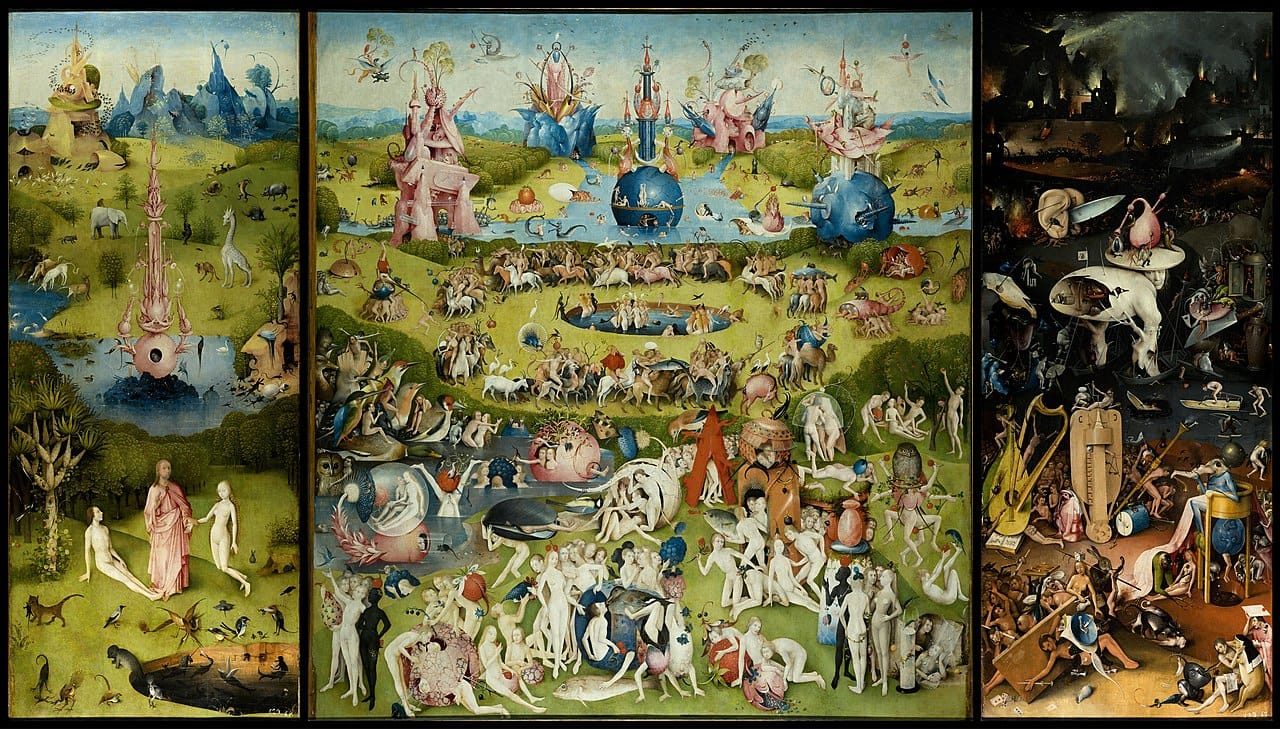
- Hieronymus Bosch – The Garden of Earthly Delights: A surrealist, chaotic masterpiece perfect for maximalist interiors.
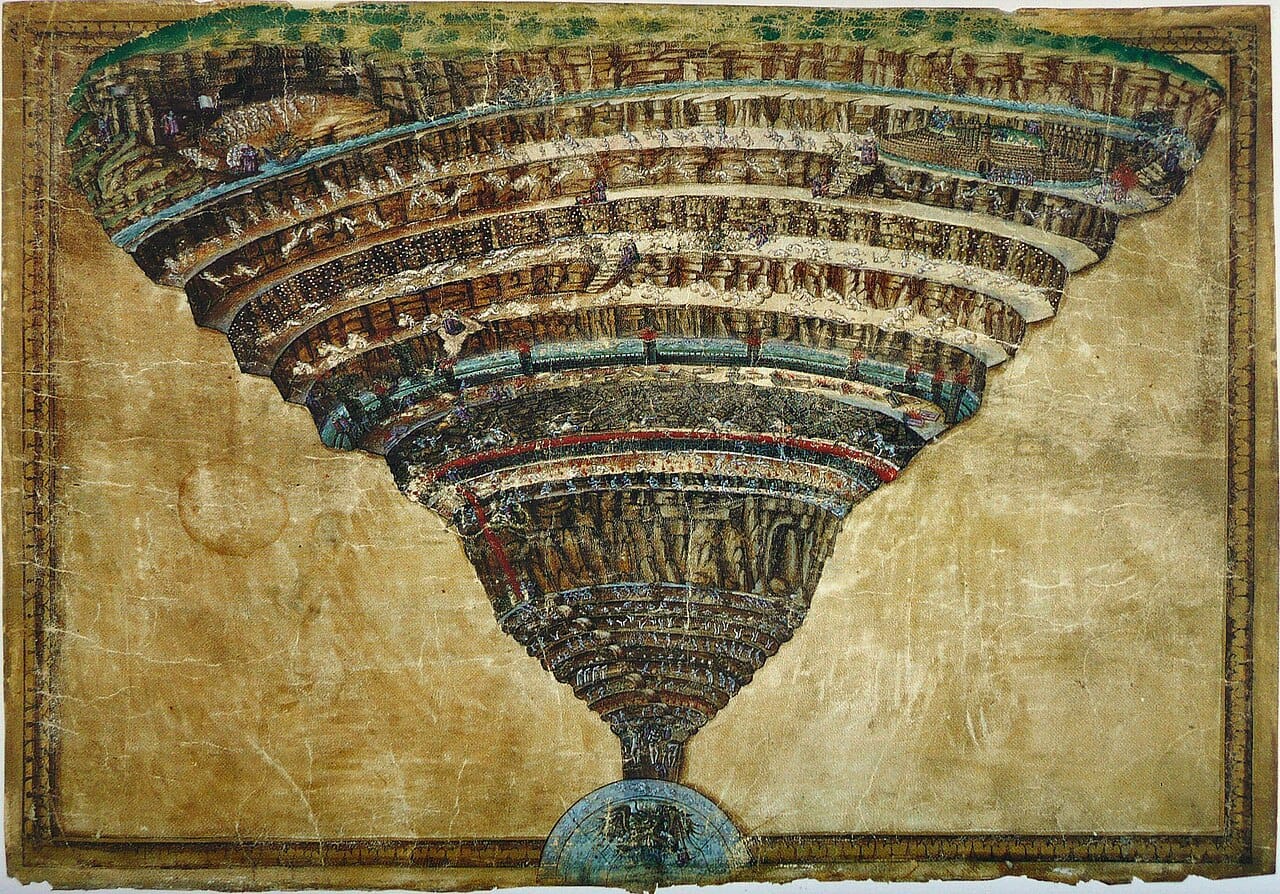
- Sandro Botticelli – Map of Hell: An architectural marvel visualizing Dante’s circles, ideal for intellectual spaces.
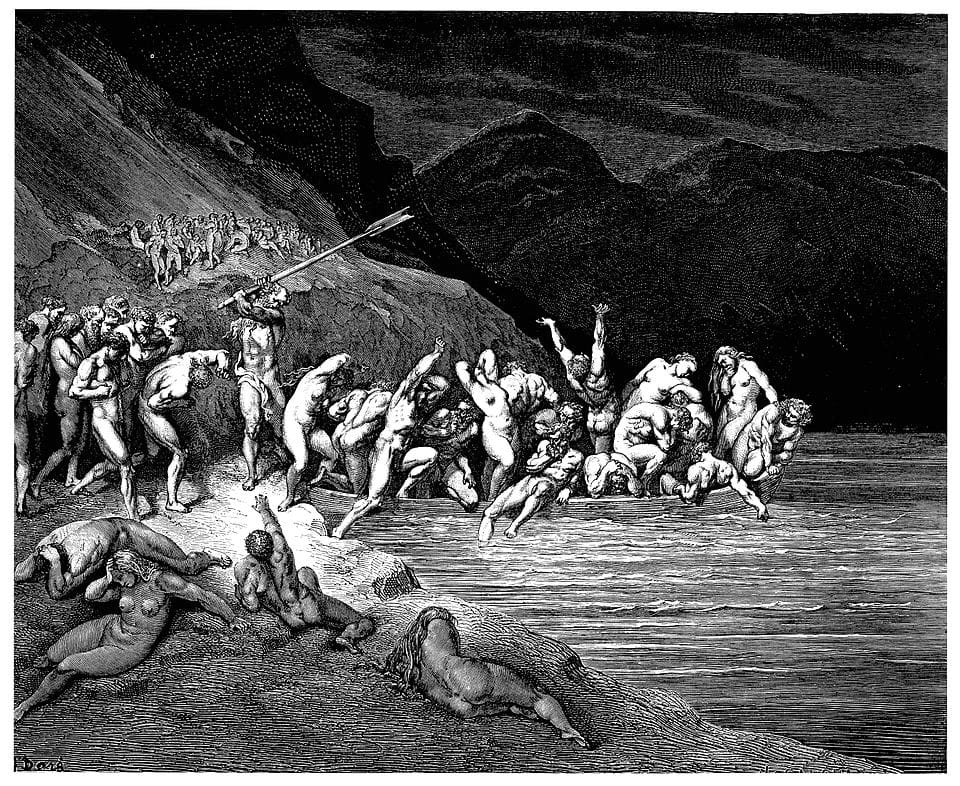
- Gustave Doré – Illustrations for Dante’s Inferno: Monochromatic, etching-style dramatic prints that define the "Dark Academia" aesthetic.
- Michelangelo – The Last Judgment: A swirling composition of bodies and divine wrath, offering classical grandeur.
- Francisco Goya – The Black Paintings: Raw, emotional, and psychological depictions suited for industrial or eclectic homes.
The Masters of the Underworld: A Closer Look at the Classics
Bringing a hell painting into your living space is a bold move—it’s an invitation to discuss history, theology, and the darker corners of the human psyche. But let's set the scary stuff aside for a moment. From a purely artistic standpoint, these artworks are technical marvels. They are dense, complex, and demand attention.
Here is how we see the "Big Three" when we are curating for a modern home:
Hieronymus Bosch: The Architect of Nightmare
When people talk about famous paintings of hell, they are almost always picturing Hieronymus Bosch. His masterpiece, The Garden of Earthly Delights (specifically the right panel), essentially defined the genre.
- The Experience: This isn’t a murky, hard-to-see darkness. It is a crisp, terrified chaos. When you stand close to this canvas, you spot something new every time: odd machinery, musical instruments weaponized as torture devices, and creatures that defy logic.
- The Palette: It’s surprisingly vibrant. Deep midnight blues are punctured by fiery vermilions and sickly pale skin tones. It provides a high-contrast aesthetic that instantly commands the room.
Sandro Botticelli: The Cartographer of the Damned
Most of us know Sandro Botticelli for his soft, romantic Birth of Venus. That’s why his Map of Hell (La Mappa dell'Inferno) is such a shock to the system. Based on Dante Alighieri’s Divine Comedy, he took a structural, almost mathematical approach.
- The Experience: It feels less like a painting and more like an architectural blueprint of an underground city. The level of detail is obsessive, tracking the descent into the abyss circle by circle.
- The Palette: Because it relies on sepia tones, faded parchment beiges, and soft earth colors, this artwork is incredibly versatile. It works perfectly in spaces with neutral color schemes where you want the subject to be the shock factor, not the colors.
Gustave Doré: The Master of Shadows
If Bosch is the master of color, Gustave Doré is the master of mood. His illustrations for Dante’s Inferno are iconic pillars of dark religious art.
- The Experience: Doré didn't just draw lines; he carved light out of darkness. His heavy use of hatching creates deep, velvety shadows and piercing beams of divine light that give these pieces a sense of three-dimensional depth.
- The Palette: Strictly monochromatic—black, white, and endless shades of gray. This starkness makes a Doré reproduction timeless. It is the "little black dress" of art history: it fits effortlessly into almost any interior design style without clashing.
Beyond Religion: The Aesthetic of Dark Art
Let’s ask the obvious question: why would anyone hang a scene of eternal damnation right above their sofa?
It sounds intense, but here is the secret we’ve learned after years in the industry: great art doesn't care about theology. It cares about emotion. In the world of interior design, paintings of hell tap into a concept known as "The Sublime."
Think of the feeling you get when you watch a massive thunderstorm roll in over the ocean. It’s beautiful, but it’s also a little terrifying. That specific mix of awe and danger is exactly the energy dark religious art brings into a home.
These artworks do something vital for a modern room: they kill the superficiality. A space full of soft colors and safe choices can sometimes feel too "precious." Adding a piece that touches on the Grotesque or Memento Mori (reminders of mortality) instantly adds gravity. It acts as an aesthetic anchor, grounding the room with weight, history, and—let's be honest—a touch of rebellious intellect.
How to Style 'Hell Paintings' in a Modern Home
This is the fun part: moving from museum admirer to curator of your own space. Hell paintings are bold statements—they don't whisper, they scream. So, you have to style them with intention.
Here is how we recommend incorporating these canvases into different design archetypes:
1. The Minimalist Contrast (The Bosch Approach)
If your room is defined by clean lines, white walls, and modern furniture, you don't need another beige abstract piece. You need chaos. A large-scale reproduction of Hieronymus Bosch or Hans Memling creates an electric contrast.
- The Look: Let the art be the only source of noise in the room.
- Placement: Hang a massive canvas above a sleek, low-profile sofa. The complexity of the painting fighting against the simplicity of the white walls is a guaranteed conversation starter.
2. Dark Academia (The Doré Approach)
For the study, library, or home office, nothing fits better than the etching style of Gustave Doré. This aesthetic thrives on moodiness, leather textures, and the smell of old books.
- The Look: Think rich, dark walls (navy, forest green, or charcoal) paired with walnut wood.
- Placement: Create a gallery wall of smaller, framed Doré pieces. The monochromatic art complements the dark walls rather than fighting them, creating a space that feels intellectual and cozy.
3. Industrial Loft (The Goya Approach)
Exposed brick, concrete floors, and iron fixtures demand art that has some grit. Delicate watercolors will get lost here. Francisco Goya’s later works, often associated with madness and darkness, fit the raw energy of industrial spaces perfectly.
- The Look: Unfiltered and edgy.
- Placement: A frameless canvas or a simple black floater frame helps the art feel raw and integrated into the industrial architecture, rather than looking too "decorated."
Frequently Asked Questions
What is the most famous painting of hell?
While there are many, Hieronymus Bosch’s right panel of The Garden of Earthly Delights is widely considered the most famous and recognizable depiction of hell in art history due to its imaginative surrealism. Michelangelo’s The Last Judgment in the Sistine Chapel is a close rival in terms of fame and scale.
Is it bad Feng Shui to have dark art in the home?
Not necessarily. While traditional Feng Shui advises against "negative" imagery in the bedroom, dark religious art can serve as a "grounding" element in active spaces like living rooms or studies. It represents the element of deep water (mystery) or fire (passion), depending on the color palette. It is best used as a conversation starter in social areas rather than rest areas.
Where can I find high-quality prints of these masterpieces?
Museum gift shops often sell posters, but for decor-worthy art, you need specialist printers. subjektiv.art specializes in high-resolution, museum-quality reproductions on canvas and fine art paper, ensuring the details of Botticelli and the shadows of Doré are perfectly preserved.
Whether you are drawn to the intricate madness of Bosch or the solemn shadows of Doré, paintings of hell offer a way to break free from the mundane. They are not just decorations; they are windows into the deepest fears and greatest imaginations of history's masters.
Embracing the darker side of art history shows a confidence in your personal style—an ability to find beauty in the chaos.