The art that was not meant for the viewer

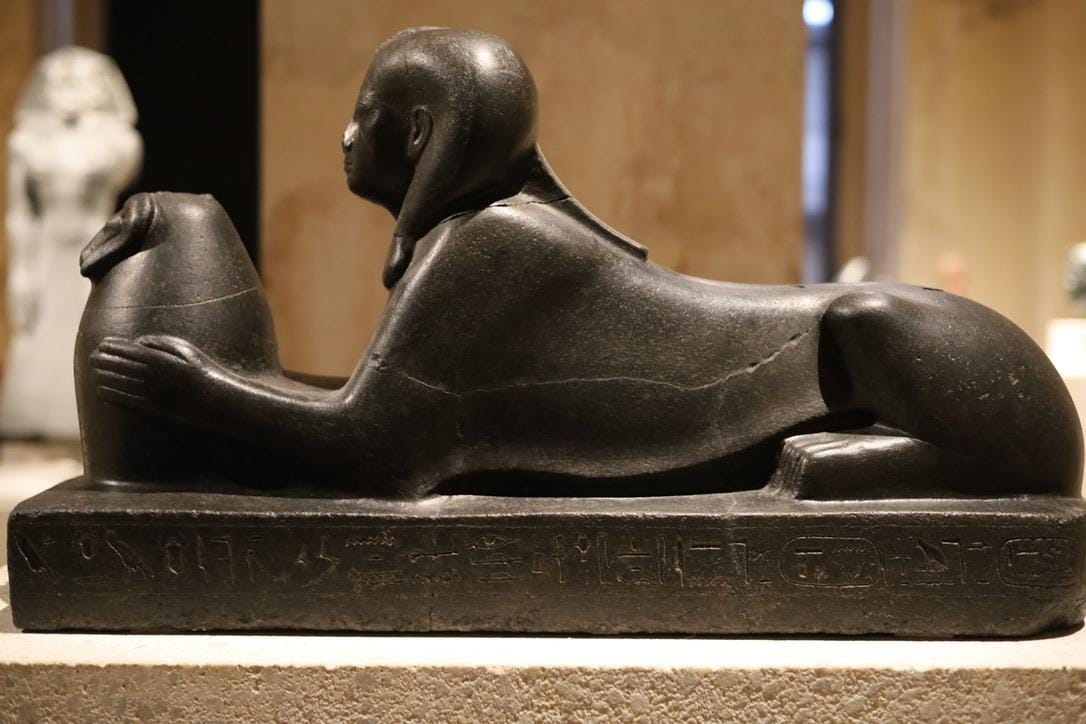
The art of Ancient Egypt fascinates and captivates us through a double effect. On the one hand, it is strikingly comprehensible: we recognize in it beauty and harmony of form, and we marvel at the craftsmanship of the artisans. Despite a canon and aesthetic unfamiliar to the European eye, Egyptian art can be “read” — we distinguish figures of humans and gods, scenes of daily life and images of the afterlife. On the other hand, it enchants us with its exoticism: strange beings with animal heads, enigmatic images and ritual objects, entire worlds shaped by another logic and atmosphere, which seem mysterious and unfathomable. In this union of the familiar and the alien lies the secret charm of Egyptian art.
We look at the art of Ancient Egypt as a collection of masterpieces: golden sarcophagi, tomb paintings, statues of gods, temple columns – all this seems to have been created for the admiration of the viewer, for aesthetic appreciation. We delight in the skill, the proportions, the details, the color, the material. Yet here lies the paradox: these artifacts – the mask of Tutankhamun, the wall paintings of the tomb of Nefertari, and others – were not created to be contemplated by human eyes. The “viewer,” as we imagine it, was not presupposed at all. Egyptian artisans didn’t work for a museum or gallery, nor for the audience, but for the gods and for eternity. Statues, wall paintings, sarcophagi, and tomb furnishings were conceived as dwellings of the sacred, as spaces where the human and the divine intersect. In this sense, the work of the artist was not “self-expression” or “individual vision,” but an act of service to the sacred, a contact with it.
The understanding of this should awaken in us, when contemplating Egyptian art, not merely an aesthetic experience, but the sense of encountering something whose presence disrupts the ordinary – at once awe and trembling, and, in addition, a feeling of sacrilege.
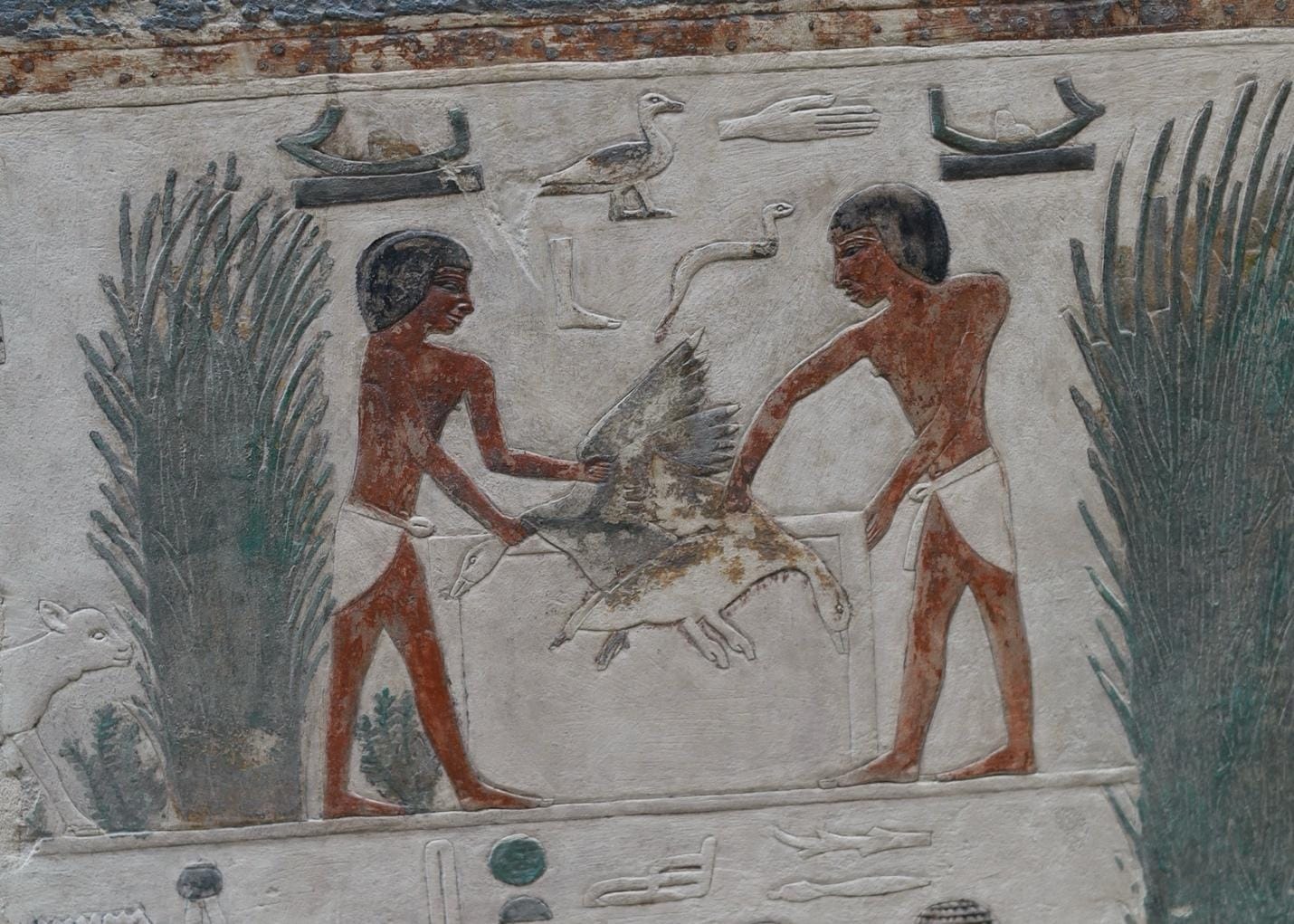
When Howard Carter, the discoverer of the tomb of Tutankhamun, described its treasures, including the exquisite gilded statues of goddesses who stood with outstretched arms guarding the canopic shrine of the king, he wrote in his diary: “To gaze upon their faces seemed almost sacrilegious.” It is worth noting that the statues, of extraordinary beauty, were placed facing directly against the walls of the shrine. Their faces were not meant for admiring glances. They were created as vessels for the presence of the deities, but they were never meant for aesthetic judgment.
And yet today, in the museum, we stand before the mask of Tutankhamun or the statue of Osiris, and they appear to us as “works of art.” We judge them in the categories of aesthetics: beauty, harmony, technical perfection. But for the ancient craftsman, this was not a “masterpiece” in our sense, but an image consecrated to the sacred, enabling its presence in the world. Where we see an “art object,” the ancient Egyptian experienced an encounter with the divine.
Here lies the paradox: what for us has become a museum exhibit, for them was a space of ritual. Our admiration is based on spectacle; theirs — on faith, or more precisely, on the perception of a special physics of the world, structured by the relationship between the divine and the human. We evaluate; they worshiped. We see in the mask of Tutankhamun a “masterpiece of antiquity,” they saw the eternal face of god.
Why, then, such extraordinary craftsmanship, if not for the human viewer? The answer is that sacred art was never intended simply to be seen, but to serve as a channel for the presence of the divine. The image created by the artisan was not merely a representation of ideas; it was itself an act of ritual, an act of spiritual experience. The meticulous decoration of the tombs, their elaborate iconography — all of this was made in order to become a portal into the world of the gods depicted therein. And such portals demanded precision: the creation of ideal images, the strict observance of canonical forms, so that the divine might truly “inhabit” that space.
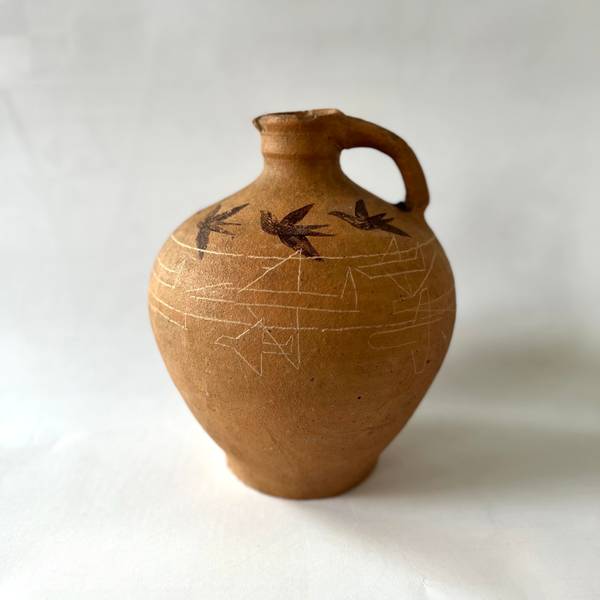
Nearly all human art before the Renaissance — from cave paintings to Byzantine icons — was predominantly sacred. Not in the sense of representing religious doctrines or dogmas, but in the sense of enabling the presence of the sacred within our reality, of bringing what is transcendent into the limits and forms of our world.
Ancient sacred art operates according to principles entirely different from those of what we now call art. Secular art is condescending toward the viewer: it seeks to give them experiences and meanings. It “plays by the rules” with the audience—whether those of its era, the market, or at least the expectations of the spectators. Worse still, sometimes by the shifting rules of “trends.” Thus, the task of the artist often includes being understandable to the viewer, pleasing them. Sacred art, however, is free from such tasks and such limitations. It has no chance to “cater” to the viewer. Yet it has other rules: the master must observe the canon and create a perfect image. But this image lies beyond the judgment of the viewer, for it is intended for the eternal, divine world—not for contemplation by the gods, but to embody the divine within itself. In this way, the highest form of aesthetics is born—not in dialogue with the public, but with the transcendent.
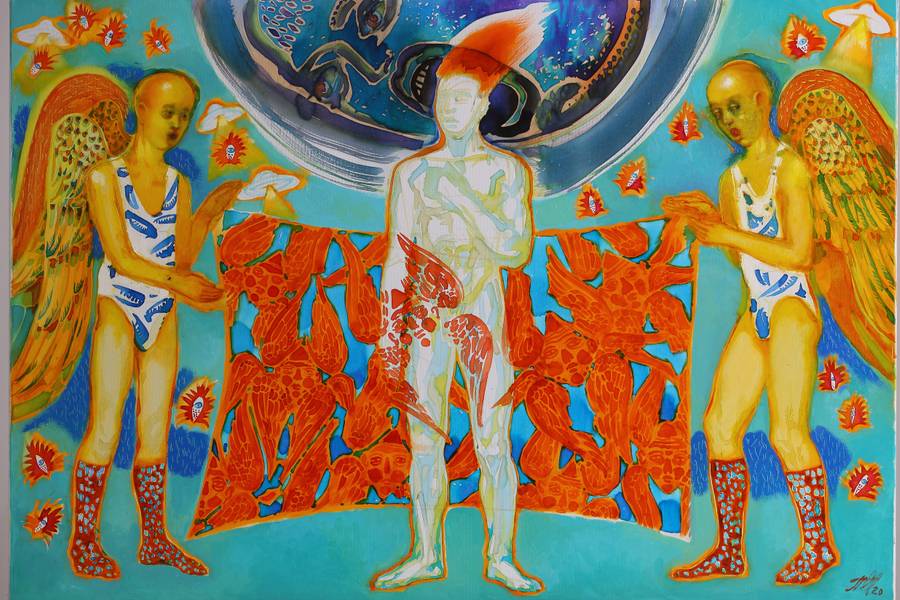
Beginning with the Renaissance—the age of undisputed masterpieces—the sacred dimension of art gradually receded, until both memory of it and sensitivity to it had nearly vanished. What came to the fore instead was the voice of the artist: one human addressing another, speaking about the human. And yet, have we not lost something in ceasing to feel awe before sacred art?
Have you ever seen the golden mask of Tutankhamun? Its phenomenon lies not only in its uniqueness as an artifact, nor solely in the perfection of its craftsmanship. For the profound viewer, it generates the effect of the presence of something greater than all human capabilities. And this is not about the extraordinary technical mastery of its maker, but about its impact, which is bound to the mystery of its essence. The fact is that it could only have been created by someone who believed profoundly. Not merely a craftsman who knew the techniques of working with gold, stone, and glass, not merely an artist who understood form and symmetry. But rather a believer, one who sincerely experienced the act of shaping the face of a deity. Thus it became not a portrait, not an ornament, and certainly not a display of status. It is a vessel of the sacred presence, through which it gazes at us – and we have been granted the unique chance to touch it with our own gaze.